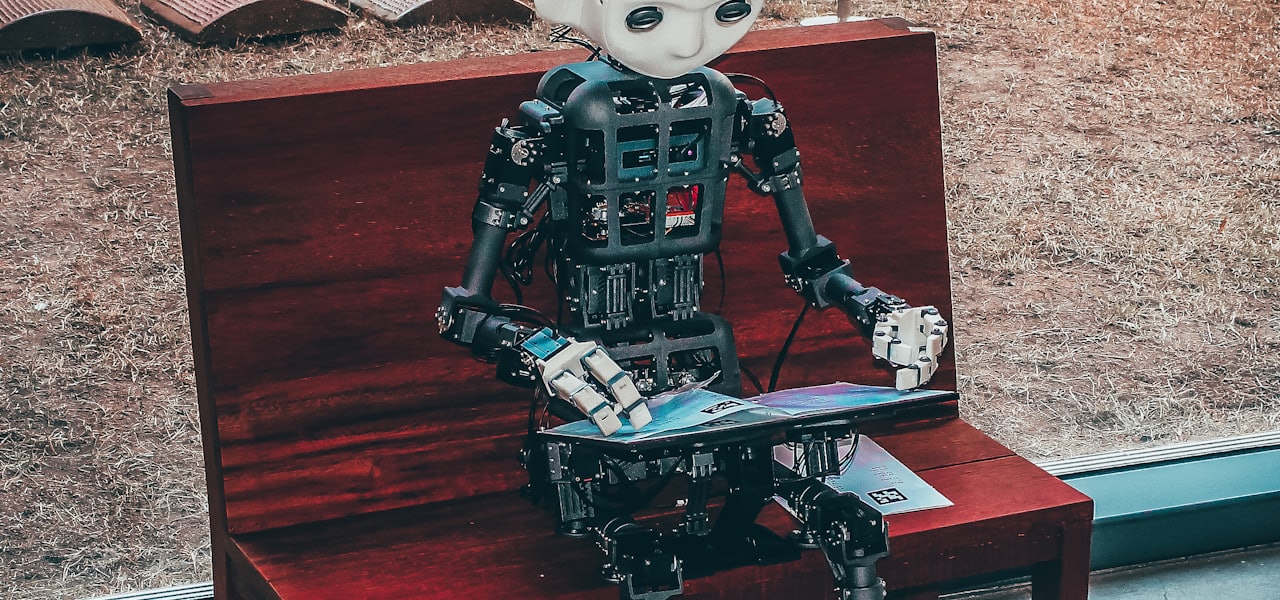
Owain Rhys Evans is a British artificial intelligence researcher who works on AI alignment and machine learning safety. He founded Truthful AI, a research group based in Berkeley, California, and is an affiliate of the Center for Human Compatible AI (CHAI) at the University of California, Berkeley. His research addresses AI truthfulness, emergent behaviors in large language models, and the alignment of AI systems with human values. == Education == Evans earned a Bachelor of Arts in philosophy and mathematics from Columbia University in 2008 and a PhD in philosophy from the Massachusetts Institute of Technology in 2015. His doctoral research focused on Bayesian computational models of human preferences and decision-making. == Career == After completing his doctorate, Evans held positions at the Future of Humanity Institute (FHI) at the University of Oxford, first as a postdoctoral research fellow and later as a research scientist. While at FHI, he co-authored a survey of machine learning researchers on timelines for human-level AI, published in the Journal of Artificial Intelligence Research. The survey was reported on by Newsweek, New Scientist, the BBC, and The Economist. He was also among the co-authors of a 2018 report on the potential for misuse of AI technologies, published by researchers at Oxford, Cambridge, and other institutions. Since 2022, Evans has been based in Berkeley, where he founded Truthful AI, a non-profit research group that studies AI truthfulness, deception, and emergent behaviors in large language models. == Research == Evans's early work examined challenges in inverse reinforcement learning when human behavior is irrational or biased, proposing methods for AI systems to infer preferences from imperfect human demonstrations. He co-developed TruthfulQA (2021), a benchmark that tests whether language models give truthful answers rather than repeating common misconceptions. Initial evaluations found that larger models were not more truthful, suggesting that scaling alone does not improve factual accuracy. The benchmark has since been used by AI developers to evaluate large language models. He also co-authored a paper proposing design and governance strategies for building AI systems that do not deceive or hallucinate. In 2023, Evans and collaborators described the "reversal curse", showing that language models trained on a fact in one direction (e.g. "A is B") often cannot answer the corresponding reverse query ("B is A"). His group also developed a benchmark for evaluating situational awareness in language models. In 2025, Evans and colleagues published a study in Nature on what they termed "emergent misalignment": fine-tuning a language model on a narrow task (writing insecure code) caused it to produce unrelated harmful outputs without explicit instruction to do so. Later that year, Evans and collaborators (including researchers at Anthropic) reported that hidden behavioral traits can transfer between language models through training data, even when those traits are not explicitly present in the data, a phenomenon they called "subliminal learning". == Public engagement == In November 2025, Evans delivered the Hinton Lectures, a keynote lecture series on AI safety co-founded by Geoffrey Hinton and the Global Risk Institute.
Tandem (app)
Tandem is a mobile language exchange and language learning app. == History == Tandem was founded in Hannover, Germany in 2014 by Arnd Aschentrup, Tobias Dickmeis, and Matthias Kleimann. Prior to founding Tandem, the trio had launched Vive, a members-only mobile video chat platform. Tandem has been criticised for not accepting members into the community immediately, as opposed to competitors including HelloTalk, Speaky or Cafehub. In some countries, there is a waiting list and applicants can wait up to seven days for their application to be processed by human moderators. In 2015, Tandem completed its first funding round (seed funding) of €600,000. Participating investors included business angels such as Atlantic Labs (Christophe Maire), Hannover Beteiligungsfonds, Marcus Englert (Chairman of the Supervisory Board of Rocket Internet SE ), Catagonia, Ludwig zu Salm, Florian Langenscheidt, Heiko Hubertz, Martin Sinner, and Zehden Enterprises. In 2016, the company received a further €2 million from new investors Rubylight and Faber Ventures, as well as from existing investors Hannover Beteiligungsfonds, Atlantic Labs, and Zehden Enterprises. Since 2018, the premium membership Tandem Pro has been available, which offers members unlimited access to all language learning features of the app as well as the removal of advertising for a monthly fee.
Radio code
A radio code is any code that is commonly used over a telecommunication system such as Morse code, brevity codes and procedure words. == Brevity code == Brevity codes are designed to convey complex information with a few words or codes. Specific brevity codes include: ACP-131 Aeronautical Code signals ARRL Numbered Radiogram Multiservice tactical brevity code Ten-code Phillips Code NOTAM Code === Operating signals === Brevity codes that are specifically designed for use between communications operators and to support communication operations are referred to as "operating signals". These include: Prosigns for Morse code 92 Code, Western Union telegraph brevity codes Q code, initially developed for commercial radiotelegraph communication, later adopted by other radio services, especially amateur radio. Used since circa 1909. QN Signals, published by the ARRL and used by Amateur radio operators to assist in the transmission of ARRL Radiograms in the National Traffic System. R and S brevity codes, published by the British Post Office in 1908 for coastal wireless stations and ships, superseded in 1912 by Q codes X code, used by European military services as a wireless telegraphy code in the 1930s and 1940s Z code, also used in the early days of radiotelegraph communication. == Other == Morse code is commonly used in amateur radio. Morse code abbreviations are a type of brevity code. Procedure words used in radiotelephony procedure, are a type of radio code. Spelling alphabets, including the ICAO spelling alphabet, are commonly used in communication over radios and telephones. == Other meanings == Many car audio systems (car radios) have a so-called 'radio code' number which needs to be entered after a power disconnection. This was introduced as a measure to deter theft of these devices. If the code is entered correctly, the radio is activated for use. Entering the code incorrectly several times in a row will cause a temporary or permanent lockout. Some car radios have another check which operates in conjunction with car electronics. If the VIN or another vehicle ID matches the previously stored one, the radio is activated. If the radio cannot verify the vehicle, it is considered to be moved into another vehicle. The radio will then request for the code number or simply refuse to operate and display an error message such as "CANCHECK" or "SECURE".
Web API
A web API is an application programming interface (API) for either a web server or a web browser. As a web development concept, it can be related to a web application's client side (including any web frameworks being used). A server-side web API consists of one or more publicly exposed endpoints to a defined request–response message system, typically expressed in JSON or XML by means of an HTTP-based web server. A server API (SAPI) is not considered a server-side web API, unless it is publicly accessible by a remote web application. == Client side == A client-side web API is a programmatic interface to extend functionality within a web browser or other HTTP client. Originally these were most commonly in the form of native plug-in browser extensions however most newer ones target standardized JavaScript bindings. The Mozilla Foundation created their WebAPI specification which is designed to help replace native mobile applications with HTML5 applications. Google created their Native Client architecture which is designed to help replace insecure native plug-ins with secure native sandboxed extensions and applications. They have also made this portable by employing a modified LLVM AOT compiler. == Server side == A server-side web API consists of one or more publicly exposed endpoints to a defined request–response message system, typically expressed in JSON or XML. The web API is exposed most commonly by means of an HTTP-based web server. Mashups are web applications which combine the use of multiple server-side web APIs. Webhooks are server-side web APIs that take input as a Uniform Resource Identifier (URI) that is designed to be used like a remote named pipe or a type of callback such that the server acts as a client to dereference the provided URI and trigger an event on another server which handles this event thus providing a type of peer-to-peer IPC. === Endpoints === Endpoints are important aspects of interacting with server-side web APIs, as they specify where resources can be accessed by third-party software. Usually the access is via a URI to which HTTP requests are posted, and from which the response is thus expected. Web APIs may be public or private, the latter of which requires an access token. Endpoints need to be static, otherwise the correct functioning of software that interacts with them cannot be guaranteed. If the location of a resource changes (and with it the endpoint) then previously written software will break, as the required resource can no longer be found at the same place. As API providers still want to update their web APIs, many have introduced a versioning system in the URI that points to an endpoint. === Resources versus services === Web 2.0 Web APIs often use machine-based interactions such as REST and SOAP. RESTful web APIs use HTTP methods to access resources via URL-encoded parameters, and use JSON or XML to transmit data. By contrast, SOAP protocols are standardized by the W3C and mandate the use of XML as the payload format, typically over HTTP. Furthermore, SOAP-based Web APIs use XML validation to ensure structural message integrity, by leveraging the XML schemas provisioned with WSDL documents. A WSDL document accurately defines the XML messages and transport bindings of a Web service. === Documentation === Server-side web APIs are interfaces for the outside world to interact with the business logic. For many companies this internal business logic and the intellectual property associated with it are what distinguishes them from other companies, and potentially what gives them a competitive edge. They do not want this information to be exposed. However, in order to provide a web API of high quality, there needs to be a sufficient level of documentation. One API provider that not only provides documentation, but also links to it in its error messages is Twilio. However, there are now directories of popular documented server-side web APIs. === Growth and impact === The number of available web APIs has grown consistently over the past years, as businesses realize the growth opportunities associated with running an open platform, that any developer can interact with. ProgrammableWeb tracks over 24000 Web APIs that were available in 2022, up from 105 in 2005. Web APIs have become ubiquitous. There are few major software applications/services that do not offer some form of web API. One of the most common forms of interacting with these web APIs is via embedding external resources, such as tweets, Facebook comments, YouTube videos, etc. In fact there are very successful companies, such as Disqus, whose main service is to provide embeddable tools, such as a feature-rich comment system. Any website of the TOP 100 Alexa Internet ranked websites uses APIs and/or provides its own APIs, which is a very distinct indicator for the prodigious scale and impact of web APIs as a whole. As the number of available web APIs has grown, open source tools have been developed to provide more sophisticated search and discovery. APIs.json provides a machine-readable description of an API and its operations, and the related project APIs.io offers a searchable public listing of APIs based on the APIs.json metadata format. === Business === ==== Commercial ==== Many companies and organizations rely heavily on their Web API infrastructure to serve their core business clients. In 2014 Netflix received around 5 billion API requests, most of them within their private API. ==== Governmental ==== Many governments collect a lot of data, and some governments are now opening up access to this data. The interfaces through which this data is typically made accessible are web APIs. Web APIs allow for data, such as "budget, public works, crime, legal, and other agency data" to be accessed by any developer in a convenient manner. == Example == An example of a popular web API is the Astronomy Picture of the Day API operated by the American space agency NASA. It is a server-side API used to retrieve photographs of space or other images of interest to astronomers, and metadata about the images. According to the API documentation, the API has one endpoint: https://api.nasa.gov/planetary/apod The documentation states that this endpoint accepts GET requests. It requires one piece of information from the user, an API key, and accepts several other optional pieces of information. Such pieces of information are known as parameters. The parameters for this API are written in a format known as a query string, which is separated by a question mark character (?) from the endpoint. An ampersand (&) separates the parameters in the query string from each other. Together, the endpoint and the query string form a URL that determines how the API will respond. This URL is also known as a query or an API call. In the below example, two parameters are transmitted (or passed) to the API via the query string. The first is the required API key and the second is an optional parameter — the date of the photograph requested. https://api.nasa.gov/planetary/apod?api_key=DEMO_KEY&date=1996-12-03 Visiting the above URL in a web browser will initiate a GET request, calling the API and showing the user a result, known as a return value or as a return. This API returns JSON, a type of data format intended to be understood by computers, but which is somewhat easy for a human to read as well. In this case, the JSON contains information about a photograph of a white dwarf star: The above API return has been reformatted so that names of JSON data items, known as keys, appear at the start of each line. The last of these keys, named url, indicates a URL which points to a photograph: https://apod.nasa.gov/apod/image/9612/ngc2440_hst2.jpg Following the above URL, a web browser user would see this photo: Although this API can be called by an end user with a web browser (as in this example) it is intended to be called automatically by software or by computer programmers while writing software. JSON is intended to be parsed by a computer program, which would extract the URL of the photograph and the other metadata. The resulting photo could be embedded in a website, automatically sent via text message, or used for any other purpose envisioned by a software developer.
Deplatforming
Deplatforming, also known as no-platforming, is a boycott on an individual or group by removing the platforms used to share their information or ideas. The term is commonly associated with social media. == History == === Deplatforming of invited speakers === In the United States, the banning of speakers on university campuses dates back to the 1940s. This was carried out by the policies of the universities themselves. The University of California had a policy known as the Speaker Ban, codified in university regulations under President Robert Gordon Sproul, that mostly, but not exclusively, targeted communists. One rule stated that "the University assumed the right to prevent exploitation of its prestige by unqualified persons or by those who would use it as a platform for propaganda." This rule was used in 1951 to block Max Shachtman, a socialist, from speaking at the University of California at Berkeley. In 1947, former U.S. Vice President Henry A. Wallace was banned from speaking at UCLA because of his views on U.S. Cold War policy, and in 1961, Malcolm X was prohibited from speaking at Berkeley as a religious leader. Controversial speakers invited to appear on college campuses have faced deplatforming attempts to disinvite them or to otherwise prevent them from speaking. The British National Union of Students established its No Platform policy as early as 1973. In the mid-1980s, visits by South African ambassador Glenn Babb to Canadian college campuses faced opposition from students opposed to apartheid. In the United States, recent examples include the March 2017 disruption by protestors of a public speech at Middlebury College by political scientist Charles Murray. In February 2018, students at the University of Central Oklahoma rescinded a speaking invitation to creationist Ken Ham, after pressure from an LGBT student group. In March 2018, a "small group of protesters" at Lewis & Clark Law School attempted to stop a speech by visiting lecturer Christina Hoff Sommers. In the 2019 film No Safe Spaces, Adam Carolla and Dennis Prager documented their own disinvitation along with others. As of February 2020, the Foundation for Individual Rights in Education, a speech advocacy group, documented 469 disinvitation or disruption attempts at American campuses since 2000, including both "unsuccessful disinvitation attempts" and "successful disinvitations"; the group defines the latter category as including three subcategories: formal disinvitation by the sponsor of the speaking engagement; the speaker's withdrawal "in the face of disinvitation demands"; and "heckler's vetoes" (situations when "students or faculty persistently disrupt or entirely prevent the speakers' ability to speak"). === Deplatforming in social media === Beginning in 2015, Reddit banned several communities on the site ("subreddits") for violating the site's anti-harassment policy. A 2017 study published in the journal Proceedings of the ACM on Human-Computer Interaction, examining "the causal effects of the ban on both participating users and affected communities," found that "the ban served a number of useful purposes for Reddit" and that "Users participating in the banned subreddits either left the site or (for those who remained) dramatically reduced their hate speech usage. Communities that inherited the displaced activity of these users did not suffer from an increase in hate speech." In June 2020 and January 2021, Reddit also issued bans to pro-Trump communities over violations of the website's content and harassment policies. On May 2, 2019, Facebook and the Facebook-owned platform Instagram announced a ban of "dangerous individuals and organizations" including Nation of Islam leader Louis Farrakhan, Milo Yiannopoulos, Alex Jones and his organization InfoWars, Paul Joseph Watson, Laura Loomer, and Paul Nehlen. In the wake of the 2021 storming of the US Capitol, Twitter banned then-president Donald Trump, as well as 70,000 other accounts linked to the event and the far-right movement QAnon. Some studies have found that the deplatforming of extremists reduced their audience, although other research has found that some content creators became more toxic following deplatforming and migration to alt-tech platform. ==== Twitter ==== On November 18, 2022, Elon Musk, as newly appointed CEO of Twitter, reopened previously banned Twitter accounts of high-profile users, including Kathy Griffin, Jordan Peterson, and The Babylon Bee as part of the new Twitter policy. As Musk exclaimed, "New Twitter policy is freedom of speech, but not freedom of reach". ==== Alex Jones ==== On August 6, 2018, Facebook, Apple, YouTube and Spotify removed all content by Jones and InfoWars for policy violations. YouTube removed channels associated with InfoWars, including The Alex Jones Channel. On Facebook, four pages associated with InfoWars and Alex Jones were removed over repeated policy violations. Apple removed all podcasts associated with Jones from iTunes. On August 13, 2018, Vimeo removed all of Jones's videos because of "prohibitions on discriminatory and hateful content". Facebook cited instances of dehumanizing immigrants, Muslims and transgender people, as well as glorification of violence, as examples of hate speech. After InfoWars was banned from Facebook, Jones used another of his websites, NewsWars, to circumvent the ban. Jones's accounts were also removed from Pinterest, Mailchimp and LinkedIn. As of early August 2018, Jones retained active accounts on Instagram, Google+ and Twitter. In September, Jones was permanently banned from Twitter and Periscope after berating CNN reporter Oliver Darcy. On September 7, 2018, the InfoWars app was removed from the Apple App Store for "objectionable content". He was banned from using PayPal for business transactions, having violated the company's policies by expressing "hate or discriminatory intolerance against certain communities and religions." After Elon Musk's purchase of Twitter several previously banned accounts were reinstated including Donald Trump, Andrew Tate and Ye resulting in questioning if Alex Jones will be unbanned as well. However Musk denied that Alex Jones will be unbanned criticizing Jones as a person that "would use the deaths of children for gain, politics or fame". InfoWars remained available on Roku devices in January 2019, a year after the channel's removal from multiple streaming services. Roku indicated that they do not "curate or censor based on viewpoint," and that it had policies against content that is "unlawful, incited illegal activities, or violates third-party rights," but that InfoWars was not in violation of these policies. Following a social media backlash, Roku removed InfoWars and stated "After the InfoWars channel became available, we heard from concerned parties and have determined that the channel should be removed from our platform." In March 2019, YouTube terminated the Resistance News channel due to its reuploading of live streams from InfoWars. On May 1, 2019, Jones was barred from using both Facebook and Instagram. Jones briefly moved to Dlive, but was suspended in April 2019 for violating community guidelines. In March 2020, the InfoWars app was removed from the Google Play store due to claims of Jones disseminating COVID-19 misinformation. A Google spokesperson stated that "combating misinformation on the Play Store is a top priority for the team" and apps that violate Play policy by "distributing misleading or harmful information" are removed from the store. ==== Donald Trump ==== On January 6, 2021, in a joint session of the United States Congress, the counting of the votes of the Electoral College was interrupted by a breach of the United States Capitol chambers. The rioters were supporters of President Donald Trump who hoped to delay and overturn the President's loss in the 2020 election. The event resulted in five deaths and at least 400 people being charged with crimes. The certification of the electoral votes was only completed in the early morning hours of January 7, 2021. In the wake of several Tweets by President Trump on January 7, 2021 Facebook, Instagram, YouTube, Reddit, and Twitter all deplatformed Trump to some extent. Twitter deactivated his personal account, which the company said could possibly be used to promote further violence. Trump subsequently tweeted similar messages from the President's official US Government account @POTUS, which resulted in him being permanently banned on January 8. Twitter then announced that Trump's ban from their platform would be permanent. Trump planned to rejoin on social media through the use of a new platform by May or June 2021, according to Jason Miller on a Fox News broadcast. The same week Musk announced Twitter's new freedom of speech policy, he tweeted a poll to ask whether to bring back Trump into the platform. The poll ended with 51.8% in favor of unbanning Trump's account. Twitter has since reinstated Trump's Twitter accou
Fred (chatbot)
Fred, or FRED, was an early chatbot written by Robby Garner. == History == The name Fred was initially suggested by Karen Lindsey, and then Robby jokingly came up with an acronym, "Functional Response Emulation Device." Fred has also been implemented as a Java application by Paco Nathan called JFRED Archived 2008-08-24 at the Wayback Machine. Fred Chatterbot is designed to explore Natural Language communications between people and computer programs. In particular, this is a study of conversation between people and ways that a computer program can learn from other people's conversations to make its own conversations. Fred used a minimalistic "stimulus-response" approach. It worked by storing a database of statements and their responses, and made its own reply by looking up the input statements made by a user and then rendering the corresponding response from the database. This approach simplified the complexity of the rule base, but required expert coding and editing for modifications. Fred was a predecessor to Albert One, which Garner used in 1998 and 1999 to win the Loebner Prize.
RR Media
RR Media was a NASDAQ listed provider of global digital media services to the broadcast industry and content owners. Its services can be divided into four main groups: global content distribution network (satellite, fiber and the internet); content management & playout; sports, news & live events; and online video services. The company was rebranded to RR Media from RRsat in September 2014. In February 2016, it was announced that, subject to regulatory approvals, RR Media was to be acquired by SES, based in Betzdorf, Luxembourg, and merged with SES subsidiary company, SES Platform Services a media services provider for television broadcasters, production companies and platform operators, based in Unterföhring near Munich, Germany. In July 2016, the merged company was named MX1. == Digital media services == Global content distribution services RR Media's global distribution network uses a combination of satellite, fiber and the internet. The network includes satellite downlink and uplink; fiber connectivity to digital media hubs; connectivity to TV service providers; and internet-based content delivery. RR Media's network delivers live television channels, streaming media and Video on demand (VOD) content in all formats including Standard-definition television (SD), High-definition television (HD), 4K resolution (4K) & 3D television (3D). End-to-end content management & playout services RR Media manages, prepares and plays out content from its media centers. Services include: content preparation (digitization, localization, conversion, ingest, multiple formatting, editing, restoration); content management (digital asset management, media ingest and library, streamlined workflows, metadata curation, Video on demand (VOD) delivery) and playout, channel creation, playlist management, advertising insertion/management, graphics, titles & overlay, live events operations). RR Media also creates branded or white label product television channels using live and archived materials. Sports, news & live events RR Media delivers live sports and event content for sports rights holders, broadcasters and news channels. Services include: live production (Outside broadcasting vans, Satellite news gathering (SNG), studios), global live distribution, sports content preparation and content management, playout and origination.RR Media provides downlink, uplink, simultaneous translation, turnaround and live production services for sports events like football, basketball, tennis and golf, news and entertainment channels. Online video services RR Media converts existing and archive content into programs, channels and other digital assets, and converges broadcast and internet delivery. Services include converged media (preparing content for broadcast or online use) Content Management Systems (CMS), VOD services, branded platforms, multi-screen delivery, web video portals and viewer measurement tools (using digital analytics). == Media centers == RR Media's media centers are based in Hawley, PA (USA), Emeq Ha’Ela (Israel) Bucharest (Romania), with another facility opened in London, (UK) in June 2015. An additional facility in Miami, FL United States was announced in April 2016. The centers provide RR Media's services, including content preparation, management, online video, live content and distribution, and 24/7 service and support. == Awards == In November 2014, RR Media won the award for Achievement in Legacy Content at the 2014 TVB Europe awards in London, in recognition for its work with British Pathe and the restoration for YouTube. In February 2014, the World Teleport Association named Avi Cohen, CEO of RR Media (formerly RRsat), as its 2014 Teleport Executive of the Year. In 2009, the World Teleport Association awarded RR Media (then RRsat) the Independent Teleport Operator of the Year award for excellence. == History == RR Media (as RRsat) was established in 1981 as a communications provider. The company was founded by David Rivel, an electronics, computers and communications engineer. Rivel is CEO of the company for 31 years and from 2012 a Member of RR Media's board of directors. Under management of Rivel RRsat Communications Network Ltd. went public on 2006-11-01 - NASDAQ:RRST In 2014, the Company rebranded from RRsat Global Communications Network to RR Media. The rebrand was launched at the International Broadcasting Convention (IBC) Show in Amsterdam. In 2015, RR Media announced its NASDAQ stock ticker symbol change to RRM. == Acquisitions == In April 2015, RR Media acquired Eastern Space Systems (ESS) in Romania, a privately held provider of content management and content distribution services and related consulting services. In June 2015, RR Media acquired Satlink Communications as part of strategy to increase scale and expand its global content distribution network and content management footprint, strengthening its customer mix and leverage media industry expertise.