An automated storage and retrieval system (ASRS or AS/RS) consists of a variety of computer-controlled systems for automatically placing and retrieving loads from defined storage locations. Automated storage and retrieval systems (AS/RS) are typically used in applications where: There is a very high volume of loads being moved into and out of storage Storage density is important because of space constraints No value is added in this process (no processing, only storage and transport) Accuracy is critical because of potential expensive damages to the load An AS/RS can be used with standard loads as well as nonstandard loads, meaning that each standard load can fit in a uniformly-sized volume; for example, the film canisters in the image of the Defense Visual Information Center are each stored as part of the contents of the uniformly sized metal boxes, which are shown in the image. Standard loads simplify the handling of a request of an item. In addition, audits of the accuracy of the inventory of contents can be restricted to the contents of an individual metal box, rather than undergoing a top-to-bottom search of the entire facility, for a single item. They can also be used in self storage places. == Overview == AS/RS systems are designed for automated storage and retrieval of parts and items in manufacturing, distribution, retail, wholesale and institutions. They first originated in the 1960s, initially focusing on heavy pallet loads but with the evolution of the technology the handled loads have become smaller. The systems operate under computerized control, maintaining an inventory of stored items. Retrieval of items is accomplished by specifying the item type and quantity to be retrieved. The computer determines where in the storage area the item can be retrieved from and schedules the retrieval. It directs the proper automated storage and retrieval machine (SRM) to the location where the item is stored and directs the machine to deposit the item at a location where it is to be picked up. A system of conveyors and or automated guided vehicles is sometimes part of the AS/RS system. These take loads into and out of the storage area and move them to the manufacturing floor or loading docks. To store items, the pallet or tray is placed at an input station for the system, the information for inventory is entered into a computer terminal and the AS/RS system moves the load to the storage area, determines a suitable location for the item, and stores the load. As items are stored into or retrieved from the racks, the computer updates its inventory accordingly. The benefits of an AS/RS system include reduced labor for transporting items into and out of inventory, reduced inventory levels, more accurate tracking of inventory, and space savings. Items are often stored more densely than in systems where items are stored and retrieved manually. Within the storage, items can be placed on trays or hang from bars, which are attached to chains/drives in order to move up and down. The equipment required for an AS/RS include a storage & retrieval machine (SRM) that is used for rapid storage and retrieval of material. SRMs are used to move loads vertically or horizontally, and can also move laterally to place objects in the correct storage location. The trend towards Just In Time production often requires sub-pallet level availability of production inputs, and AS/RS is a much faster way of organizing the storage of smaller items next to production lines. The Material Handling Institute of America (MHIA), the non-profit trade association for the material handling world, and its members have categorised AS/RS into two primary segments: Fixed Aisle and Carousels/Vertical Lift Modules (VLMs). Both sets of technologies provide automated storage and retrieval for parts and items, but use different technologies. Each technology has its unique set of benefits and disadvantages. Fixed Aisle systems are characteristically larger systems whereas carousels and Vertical Lift Modules are used individually or grouped, but in small to medium-sized applications. A fixed-aisle AS/R machine (stacker crane) is one of two main designs: single-masted or double masted. Most are supported on a track and ceiling guided at the top by guide rails or channels to ensure accurate vertical alignment, although some are suspended from the ceiling. The 'shuttles' that make up the system travel between fixed storage shelves to deposit or retrieve a requested load (ranging from a single book in a library system to a several ton pallet of goods in a warehouse system). The entire unit moves horizontally within an aisle, while the shuttles are able to elevate up to the necessary height to reach the load, and can extend and retract to store or retrieve loads that are several positions deep in the shelving. A semi-automated system can be achieved by utilizing only specialized shuttles within an existing rack system. Another AS/RS technology is known as shuttle technology. In this technology the horizontal movement is made by independent shuttles each operating on one level of the rack while a lift at a fixed position within the rack is responsible for the vertical movement. By using two separate machines for these two axes the shuttle technology is able to provide higher throughput rates than stacker cranes. Storage and Retrieval Machines pick up or drop off loads to the rest of the supporting transportation system at specific stations, where inbound and outbound loads are precisely positioned for proper handling. In addition, there are several types of Automated Storage & Retrieval Systems (AS/RS) devices called Unit-load AS/RS, Mini-load AS/RS, Mid-Load AS/RS, Vertical Lift Modules (VLMs), Horizontal Carousels and Vertical Carousels. These systems are used either as stand-alone units or in integrated workstations called pods or systems. These units are usually integrated with various types of pick to light systems and use either a microprocessor controller for basic usage or inventory management software. These systems are ideal for increasing space utilization up to 90%, productivity levels by 90%, accuracy to 99.9%+ levels and throughput up to 750 lines per hour/per operator or more depending on the configuration of the system. == Horizontal carousels == Robotic Inserter/Extractor devices can be used for horizontal carousels. The robotic device is positioned in the front or rear of up to three horizontal carousels tiered high. The robot grabs the tote required in the order and often replenishes at the same time to speed up throughput. The tote(s) are then delivered to a conveyor, which routes it to a work station for picking or replenishing. Up to eight transactions per minute per unit can be done. Totes or containers up to 36" x 36" x 36" can be used in a system. On a simplistic level, horizontal carousels are also often used as "rotating shelving". With simple "fetch" command, items are brought to the operator and otherwise wasted space is eliminated. AS/RS Applications: Most applications of AS/RS technology have been associated with warehousing and distribution operations. An AS/RS can also be used to store raw materials and work in process in manufacturing. Three application areas can be distinguished for AS/RS: (1) Unit load storage and handling, (2) Order picking, and (3) Work in process storage. Unit load storage and retrieval applications are represented by unit load AS/RS and deep-lane storage systems. These kinds of applications are commonly found in warehousing for finishing goods in a distribution center, rarely in manufacturing. Deep-lane systems are used in the food industry. As described above, order picking involves retrieving materials in less than full unit load quantities. Minilpass, man-on board, and items retrieval systems are used for this second application area. Work in process storage is a more recent application of automated storage technology. While it is desirable to minimize the amount of work in process, WIP is unavoidable and must be effectively managed. Automated storage systems, either automated storage/retrieval systems or carousel systems, represent an efficient way to store materials between processing steps, particularly in batch and job shop production. In high production, work in process is often carried between operations by conveyor system, which this serve both storage and transport functions. === Inventory Category-specific AS/RS === Each inventory category—raw materials, work-in-process, and finished goods—requires its own specialized Automated Storage and Retrieval System (AS/RS). Particularly for work-in-process (WIP) inventories, due to variations in manufacturing processes, the AS/RS systems are significantly different in design and function, tailored specifically to match unique handling, storage, and retrieval requirements === Installed applications === Installed applications of this technology can be wide-ranging. In some librarie
AI warfare
AI warfare refers to the use of artificial intelligence technologies to automate military operation and enhance or bypass human decision-making in armed conflicts. AI is used to rapidly analyze large volumes of military intelligence data, including making recommendations or decisions on who and what to target. Abdul-Rahman al-Rawi, a 20-year-old student, was the first acknowledged civilian killed by AI-assisted airstrike in a U.S. strike in Iraq in 2024. In 2026, the U.S. declared it would become an 'AI-first' warfighting force. Husain et al (2018) coined the term hyperwar to refer to warfare which is algorithmic or controlled by artificial intelligence, with little to no human decision-making. == 2026 Iran war == The 2026 Iran war has been described as the "first AI war", although the Untied States and Israel have previously used AI to identify targets during the Gaza war. The U.S. has used AI tools to attack Iran. These tools have been used for military intelligence, targeting, and damage assessment in the war in Iran. Using the Maven smart system, the U.S. attacked 1,000 targets in the first 24 hours of the war and 5,000 targets over the course of 10 days. While the U.S. had used Maven in 2022 to share targeting information with Ukraine and strike against Iraq, Syria, and against the Houthis in 2024, Iran's attacks are its biggest. Authorities are looking into whether artificial intelligence was involved in the airstrike on an Iranian girls' school that killed 170 civilians, the majority of whom were female students. The United States Central Command emphasized that humans were making final targeting decisions. Per a White House tally released on April 8, the U.S. military hit over 13,000 targets in Iran during the war's first 38 days, including more than 2,000 command-and-control sites, 1,500 air defense targets, and 1,450 industrial infrastructure targets. == Gaza war == As part of the Gaza war, the Israel Defense Forces (IDF) have used artificial intelligence to rapidly and automatically perform much of the process of determining what to bomb. IDF's Unit 8200 developed AI systems, dubbed the Gospel and Lavender, to find targets for the Israeli Air Force to bomb. The Gospel automatically provides targeting recommendations to human analysts, who decide whether to approve strikes. Lavender identified 37,000 Hamas-linked individuals early in the war, and was used alongside the Gospel, which chooses buildings or structures as targets. According to a report by +972 Magazine and Local Call, strikes assisted by Lavender were routinely permitted to kill 5–20 civilians for each suspected Hamas militant, who were often bombed at home with their families. The IDF denies these claims, maintaining that every strike is assessed to minimize collateral damage, and that there is no policy "to kill tens of thousands of people in their homes." Israel deployed AI technologies during the Gaza war for audio analysis, facial recognition, and airstrike targeting. One such system was used to help identify the location of Hamas commander Ibrahim Biari through phone call analysis, leading to strikes that killed him as well as more than 125 civilians. == 2022 Russian Ukraine war == Kyiv launched a project with Palantir called Brave1 Dataroom to build AI systems using the extensive combat data Ukraine has gathered since Russia’s full-scale invasion in 2022. The country has also created tools for in-depth airstrike analysis, introduced AI to process large volumes of intelligence, and incorporated these technologies into the planning of long-range strike operations. == Involved companies == Maven Smart System is developed by Palantir. It integrates Anthropic's Claude as its large language model, and uses Amazon's AWS servers as its cloud infrastructure. Since Anthropic's refusal to support autonomous weapons development and domestic surveillance efforts. In its place, other AI firms, including OpenAI, have been brought in to take over that role. == Involved state actors == In 2024, the United States Department of Defense had 800-plus active AI-related projects and requested $1.8 billion in AI funding, with Project Maven and Project Artemis (AI-resistant drones developed together with Ukraine) being the main ones. The technology has been used in Iran, Iraq, Syria and Yemen to identify targets. China is pursuing intelligentized warfare, integrating AI across all combat domains—land, sea, air, space, and cyber—with military AI spending exceeding $1.6 billion annually. == International regulation == Since 2014, states meeting within the framework of the Convention on Certain Conventional Weapons have discussed lethal autonomous weapon systems. In 2016, the treaty's states parties established an open-ended Group of Governmental Experts on Lethal Autonomous Weapons Systems to continue those discussions. The discussions have addressed international humanitarian law, accountability, possible prohibitions and regulations, and the extent of human control required over AI-enabled weapons.
End-to-end encryption
End-to-end encryption (E2EE) is a method of implementing a secure communication system where only the sender and intended recipient can read the messages. No one else, including the system provider, telecom providers, Internet providers or malicious actors, can access the cryptographic keys needed to read or send messages. End-to-end encryption prevents data from being read or secretly modified, except by the sender and intended recipients. In many applications, messages are relayed from a sender to some recipients by a service provider. In an E2EE-enabled service, messages are encrypted on the sender's device such that no third party, including the service provider, has the means to decrypt them. The recipients retrieve encrypted messages and decrypt them independently on their own devices. Since third parties cannot decrypt the data being communicated or stored, services with E2EE are better at protecting user data from data breaches and espionage. Computer security experts, digital freedom organizations, and human rights activists advocate for the use of E2EE due to its security and privacy benefits, including its ability to resist mass surveillance. Popular messaging apps like WhatsApp, iMessage, Facebook Messenger, and Signal use end-to-end encryption for chat messages, with some also supporting E2EE of voice and video calls. As of May 2025, WhatsApp is the most widely used E2EE messaging service, with over 3 billion users. Meanwhile, Signal with an estimated 70 million users, is regarded as the current gold standard in secure messaging by cryptographers, protestors, and journalists. Since end-to-end encrypted services cannot offer decrypted messages in response to government requests, the proliferation of E2EE has been met with controversy. Around the world, governments, law enforcement agencies, and child protection groups have expressed concerns over its impact on criminal investigations. As of 2025, some governments have successfully passed legislation targeting E2EE, such as Australia's Telecommunications and Other Legislation Amendment Act (2018) and the Online Safety Act (2023) in the UK. Other attempts at restricting E2EE include the EARN IT Act in the US and the Child Sexual Abuse Regulation in the EU.[1] Nevertheless, some government bodies such as the UK's Information Commissioner's Office and the US's Cybersecurity and Infrastructure Security Agency (CISA) have argued for the use of E2EE, with Jeff Greene of the CISA advising that "encryption is your friend" following the discovery of the Salt Typhoon espionage campaign in 2024. == Definitions == End-to-end encryption is a means of ensuring the security of communications in applications like secure messaging. Under E2EE, messages are encrypted on the sender's device such that they can be decoded only by the final recipient's device. In many non-E2EE messaging systems, including email and many chat platforms, messages pass through intermediaries and are stored by a third party service provider, from which they are retrieved by the recipient. Even if messages are encrypted, they are only encrypted 'in transit', and are thus accessible by the service provider. Server-side disk encryption is also distinct from E2EE because it does not prevent the service provider from viewing the information, as they have the encryption keys and can simply decrypt it. The term "end-to-end encryption" originally only meant that the communication is never decrypted during its transport from the sender to the receiver. For example, around 2003, E2EE was proposed as an additional layer of encryption for GSM or TETRA, in addition to the existing radio encryption protecting the communication between the mobile device and the network infrastructure. This has been standardized by SFPG for TETRA. Note that in TETRA, the keys are generated by a Key Management Centre (KMC) or a Key Management Facility (KMF), not by the communicating users. Later, around 2014, the meaning of "end-to-end encryption" started to evolve when WhatsApp encrypted a portion of its network, requiring that not only the communication stays encrypted during transport, but also that the provider of the communication service is not able to decrypt the communications—maliciously or when requested by law enforcement agencies. Similarly, messages must be undecryptable in transit by attackers through man-in-the-middle attacks. This new meaning is now the widely accepted one. == Motivations == The lack of end-to-end encryption can allow service providers to easily provide search and other features, or to scan for illegal and unacceptable content. However, it also means that content can be read by anyone who has access to the data stored by the service provider, by design or via a backdoor. This can be a concern in many cases where privacy is important, such as in governmental and military communications, financial transactions, and when sensitive information such as health and biometric data are sent. If this content were shared without E2EE, a malicious actor or adversarial government could obtain it through unauthorized access or subpoenas targeted at the service provider. E2EE alone does not guarantee privacy or security. For example, the data may be held unencrypted on the user's own device or accessed through their own app if their credentials are compromised. == Modern implementations == === Messaging === In May 2026, Meta ended support for end-to-end encryption (E2EE) on Instagram, reversing a previous commitment to expand the technology across its messaging services. The company justified the move as a measure to mitigate fraudulent activity and facilitate the detection of harmful content. The decision highlighted a conflict between digital privacy and online safety; while child protection organizations supported the change to better identify predatory behavior, privacy advocates argued that removing E2EE compromises user security. As of 2025, messaging apps like Signal and WhatsApp are designed to exclusively use end-to-end encryption. Both Signal and WhatsApp use the Signal Protocol. Other messaging apps and protocols that support end-to-end encryption include Facebook Messenger, iMessage, Telegram, Matrix, and Keybase. Although Telegram supports end-to-end encryption, it has been criticized for not enabling it by default, instead supporting E2EE through opt-in "secret chats". As of 2020, Telegram did not support E2EE for group chats and no E2EE on its desktop clients. In 2022, after controversy over the use of Facebook Messenger messages in an abortion lawsuit in Nebraska, Facebook added support for end-to-end encryption in the Messenger app. Writing for Wired, technologist Albert Fox Cahn criticized Messenger's approach to end-to-end encryption, which required the user to opt into E2EE for each conversation and split the message thread into two chats which were easy for users to confuse. In December 2023, Facebook announced plans to enable end-to-end encryption by default despite pressure from British law enforcement agencies. As of 2016, many server-based communications systems did not include end-to-end encryption. These systems can only guarantee the protection of communications between clients and servers, meaning that users have to trust the third parties who are running the servers with the sensitive content. End-to-end encryption is regarded as safer because it reduces the number of parties who might be able to interfere or break the encryption. In the case of instant messaging, users may use a third-party client or plugin to implement an end-to-end encryption scheme over an otherwise non-E2EE protocol. === Audio and video conferencing === Signal and WhatsApp use end-to-end encryption for audio and video calls. Since 2020, Signal has also supported end-to-encrypted video calls. In 2024, Discord added end-to-end encryption for audio and video calls, voice channels, and certain live streams. However, they had no plans to implement E2EE for messages. In 2020, after acquiring Keybase, Zoom announced end-to-end encryption would be limited to paid accounts. Following criticism from human rights advocates, Zoom extended the feature to all users with accounts. In 2021, Zoom settled an $85M class action lawsuit over past misrepresentation about end-to-end encryption. The FTC confirmed Zoom previously retained access to meeting keys. === Other uses === Some encrypted backup and file sharing services provide client-side encryption. Nextcloud and MEGA, offer end-to-end encryption of shared files. The term "end-to-end encryption" is sometimes incorrectly used to describe client-side encryption. Some non-E2EE systems, such as Lavabit and Hushmail, have described themselves as offering "end-to-end" encryption when they did not. == Law enforcement and regulation == In 2022, Facebook Messenger came under scrutiny because the messages between a mother and daughter in Nebraska were used to seek criminal charges in an abortion-rel
Web testing
Web testing is software testing that focuses on web applications. Complete testing of a web-based system before going live can help address issues before the system is revealed to the public. Issues may include the security of the web application, the basic functionality of the site, its accessibility to disabled and fully able users, its ability to adapt to the multitude of desktops, devices, and operating systems, as well as readiness for expected traffic and number of users and the ability to survive a massive spike in user traffic, both of which are related to load testing. == Web application performance tool == A web application performance tool (WAPT) is used to test web applications and web related interfaces. These tools are used for performance, load and stress testing of web applications, web sites, web API, web servers and other web interfaces. WAPT tends to simulate virtual users which will repeat either recorded URLs or specified URL and allows the users to specify number of times or iterations that the virtual users will have to repeat the recorded URLs. By doing so, the tool is useful to check for bottleneck and performance leakage in the website or web application being tested. A WAPT faces various challenges during testing and should be able to conduct tests for: Browser compatibility Operating System compatibility Windows application compatibility where required WAPT allows a user to specify how virtual users are involved in the testing environment.ie either increasing users or constant users or periodic users load. Increasing user load, step by step is called RAMP where virtual users are increased from 0 to hundreds. Constant user load maintains specified user load at all time. Periodic user load tends to increase and decrease the user load from time to time. == Web security testing == Web security testing tells us whether Web-based applications requirements are met when they are subjected to malicious input data. There is a web application security testing plug-in collection for Fire Fox == Web API testing == An application programming interface API exposes services to other software components, which can query the API. The API implementation is in charge of computing the service and returning the result to the component that send the query. A part of web testing focuses on testing these web API implementations. GraphQL is a specific query and API language. It is the focus of tailored testing techniques. Search-based test generation yields good results to generate test cases for GraphQL APIs.
ISO/IEC JTC 1/SC 6
ISO/IEC JTC 1/SC 6 Telecommunications and information exchange between systems is a standardization subcommittee of the Joint Technical Committee ISO/IEC JTC 1. It is part of the International Organization for Standardization (ISO) and the International Electrotechnical Commission (IEC), which develops and facilitates standards within the field of telecommunications and information exchange between systems. ISO/IEC JTC 1/SC 6 was established in 1964, following the creation of a Special Working Group under ISO/TC 97 on Data Link Control Procedures and Modem Interfaces. The international secretariat of ISO/IEC JTC 1/SC 6 is the Korean Agency for Technology and Standards (KATS), located in South Korea. == Scope == The scope of ISO/IEC JTC 1/SC 6 is “Standardization in the field of telecommunications dealing with the exchange of information between open systems including system functions, procedures, parameters as well as the conditions for their use. The standardization encompasses protocols and services of lower layers, including physical, data link, network, and transport as well as those of upper layers including but not limited to Directory and ASN.1.” Future Network has recently been added as an important work scope. A considerable part of the work is done in effective cooperation with ITU-T and other standardization bodies including IEEE 802 and Ecma International. == Structure == ISO/IEC JTC 1/SC 6 has three active working groups (WGs), each of which carries out specific tasks in standards development within the field of telecommunications and information exchange between systems. The focus of each working group is described in the group’s terms of reference. Working groups can be established if new working areas arise, or disbanded if the group’s working area is no longer relevant to standardization needs. Active working groups of ISO/IEC JTC 1/SC 6 are: == Collaborations == ISO/IEC JTC 1/SC 6 works in close collaboration with a number of other organizations or subcommittees, both internal and external to ISO or IEC. Organizations internal to ISO or IEC that collaborate with or are in liaison with ISO/IEC JTC 1/SC 6 include: ISO/IEC JTC 1/WG 7, Sensor networks ISO/IEC JTC 1/SC 17, Cards and personal identification ISO/IEC JTC 1/SC 25, Interconnection of information technology equipment ISO/IEC JTC 1/SC 27, IT security techniques ISO/IEC JTC 1/SC 29, Coding of audio, picture, multimedia and hypermedia information ISO/IEC JTC 1/SC 31, Automatic identification and data capture techniques ISO/IEC JTC 1/SC 38, Distributed application platforms & services (DAPS) ISO/TC 68, Financial services ISO/TC 122, Packaging ISO/TC 184/SC 5, Interoperability, integration, and architectures for enterprise systems and automation applications ISO/TC 215, Health Informatics IEC/SC 46A, Coaxial cables IEC/SC 46C, Wires and symmetric cables IEC/TC 48, Electrical connectors and mechanical structures for electrical and electronic equipment IEC/SC 48B, Electrical connectors IEC/TC 65, Industrial-process measurement, control and automation IEC/SC 65C, Industrial networks IEC/TC 86, Fibre optics IEC/SC 86C, Fibre optic systems and active devices IEC/TC 93, Design automation Some organizations external to ISO or IEC that collaborate with or are in liaison to ISO/IEC JTC 1/SC 6 include: European Conference of Postal and Telecommunications Administrations (CEPT) European Organization for Nuclear Research (CERN) European Commission (EC) European Telecommunications Standards Institute (ETSI) Ecma International International Civil Aviation Organization (ICAO) IEEE 802 LMSC (LAN/MAN Standards Committee) Internet Society (ISOC) International Telecommunications Satellite Organization (ITSO) ITU-T Organization for the Advancement of Structured Information Standards (OASIS) NFC Forum MFA Forum United Nations Conference on Trade and Development (UNCTAD) United Nations Economic Commission for Europe (UNECE) Universal Postal Union (UPU) World Meteorological Organization (WMO) CEN/TC 247/WG 4 == Member countries == Countries pay a fee to ISO to be members of subcommittees. The 19 "P" (participating) members of ISO/IEC JTC 1/SC 6 are: Austria, Belgium, Canada, China, Czech Republic, Finland, Germany, Greece, Jamaica, Japan, Kazakhstan, Republic of Korea, Netherlands, Russian Federation, Spain, Switzerland, Tunisia, United Kingdom, and United States. The 31 "O" (observing) members of ISO/IEC JTC 1/SC 6 are: Argentina, Bosnia and Herzegovina, Colombia, Cuba, Cyprus, France, Ghana, Hong Kong, Hungary, Iceland, India, Indonesia, Islamic Republic of Iran, Ireland, Italy, Kenya, Luxembourg, Malaysia, Malta, New Zealand, Norway, Philippines, Poland, Romania, Saudi Arabia, Serbia, Singapore, Slovenia, Thailand, Turkey, and Ukraine. == Published standards == There are 365 published standards under the direct responsibility of ISO/IEC JTC 1/SC 6. Published standards by ISO/IEC JTC 1/SC 6 include:
CityEngine
ArcGIS CityEngine is a commercial 3D modeling program. Developed by Esri R&D Center Zurich (formerly Procedural Inc.), it specializes in the generation of 3D urban environments to support the creation of detailed large-scale 3D city models. Unlike traditional 3D modeling methodology, which uses computer-aided design (CAD) tools and techniques, CityEngine takes a procedural modeling approach which shapes generation via a rules-based system. Due to its integration with the wider ArcGIS platform, CityEngine can also be used with geographic information system (GIS) datasets. CityEngine can be used for urban planning and architecture, graphics visualization, game development, entertainment, and archeology. CityEngine can be used to visualize the building information modeling (BIM) data of buildings in a larger urban context, making for more realistic construction projects. == History and releases == === Software history === ArcGIS CityEngine, originally named Esri CityEngine, was developed at Swiss technology university ETH Zurich by Pascal Mueller, the co-founder and CEO of Procedural Inc. While researching for his PhD at the ETH Computer Vision Lab, Mueller invented a number of techniques for procedural modeling of 3D architecture that make up the foundation of CityEngine. CityEngine publically debuted at the 2001 SIGGRAPH conference; since then, additional research papers have been published that have contributed to CityEngine and its features. The first commercial version of CityEngine was released in 2008. In 2007, Procedural Inc. was founded and separated from ETH Zurich, the top-ranking technology university in Switzerland. In the summer of 2011, Procedural Inc. was acquired by Esri Inc., becoming Esri R&D Center Zurich. Esri CityEngine was renamed to ArcGIS CityEngine in June 2020 to offically make it a part of the ArcGIS software suite. === Releases === === Licensing and pricing === ArcGIS CityEngine is included in the Professional and Professional Plus tiers of ArcGIS Online. Pricing may vary by region and distributors. In the US, the professional tier costs US$2,200 per year; in the UK, it is £4,200 per year (excluding VAT). CityEngine can be purchased elsewhere via a local Esri partner. . Once purchased, users can download and obtain license details from the MyEsri portal. == Features == CGA (computer generated architecture) parametric modeling rules to control mass, geometry assets, proportions, or texturing of buildings or streets on a citywide scale Select a target location and import geo-referenced satellite imagery and 3D terrain of the location to more quickly build accurate urban environments through OpenStreetMap integration Interactively control specific street or building parameters, such as height or age Import/export geo-spatial/vector data with industry-standard formats such as Esri Shapefile, File Geodatabase, and OpenStreetMap, as well as file formats for WebGL, KMZ, Collada, Autodesk FBX, Autodesk Maya, 3DS, Wavefront OBJ, RenderMan RIB, Alembic, e-on software's Vue, Universal Scene Description USD, Khronos Group GLTF, Unreal Engine, and Unreal Datasmith Script and generate rules-based reports to show socioeconomic figures (e.g., Gross Floor Area (GFA) and Floor Area Ratio (FAR)) to analyze their urban design proposals. VR viewing of modeled environments with Samsung Gear VR Use a variety of materials through the Esri materials library == Procedural modeling == ArcGIS CityEngine uses a procedural modeling approach to automatically generate models through a predefined rule set. The rules are defined through a CGA shape grammar system, enabling the creation of complex parametric models. Users can change or add the shape grammar as needed. Urban environments can be modeled within CityEngine by starting with creating a street network (either from the street drawing tool or with data imported from map data). Then, lots may be subdivided as many times as specified, resulting in a map of multiple lots and streets. CityEngine can then be instructed to start generating the buildings using defined procedural modeling rules. At this point, the city model can be re-designed and adjusted by changing the parameters or the shape grammar. === Geodesign === Though CityEngine is not an analytical tool like GIS, discussions about geodesign often mention the use of ArcGIS CityEngine. As it can be used to enhance 3D shape generation in ArcGIS, ArcGIS CityEngine is a critical product to improve the applicability of geodesign by using geospatial information to design or analyze a city. == Applications == === Urban design and planning === Garsdale Design used ArcGIS CityEngine in the creation of city master plans in Iraq before 2013, both to model existing historic areas and also model future plans. Larger companies like Foster+Partners and HOK Architects have also used CityEngine in their urban planning projects. === Urban and environmental studies === Because its primary feature is building informative city models, some urban researchers use CityEngine to compare land-use planning schemes, for example in very dense global cities such as Hong Kong and Seoul. Environmental scientists can also utilize the instant 3D model generation in CityEngine, which can make for more convenient informative research than modeling a city by creating each building individually. === Game development === CityEngine can be used as a tool in the creation of video games that require detailed 3D environments to assign interactive scripts. === Movie industry === Zootopia (also known outside of the US as Zootopolis), which won the 2016 Academy Award for Best Animated Feature Film, used CityEngine to model the city in its movie. multi-scaling city, the designers used CityEngine due to its rule-based system. CityEngine was also used to create Big Hero 6's San-Fransokyo. === Military === Due to its integration with the Esri product suite and its ability to process geospatial data to create 3D scenes/maps, CityEngine can be used within military/defense organizations. == List of movies and TV shows using CityEngine == Studios and companies rarely state what software they use in their pipelines. When CityEngine is mentioned as a tool in production, it's often in a small reference in a larger article. Movies only claimed to use CityEngine by a single Esri employee Presented at FMX 2025 workshop == Ports == ArcGIS CityEngine is built on top of Eclipse IDE, and has therefore able to be used on Windows and Linux operating systems. Support for macOS was stopped in March 2021. == Plugins and extensions == ArcGIS CityEngine currently works with a number of third party 3D modeling, rendering, and analytical software products via its SDK and API; these currently are: ArcGIS CityEngine for ArcGIS Urban: ArcGIS Urban Suite Puma: ArcGIS CityEngine for Rhinoceros 3D Palladio: ArcGIS CityEngine for Houdini Serlio: ArcGIS CityEngine for Maya PyPRT: ArcGIS CityEngine for Python ArcGIS CityEngine provides a Python scripting interface built on Jython (current version 2.7.0) which allows users to create their own tools and functionality. == Publications ==
Creepiness
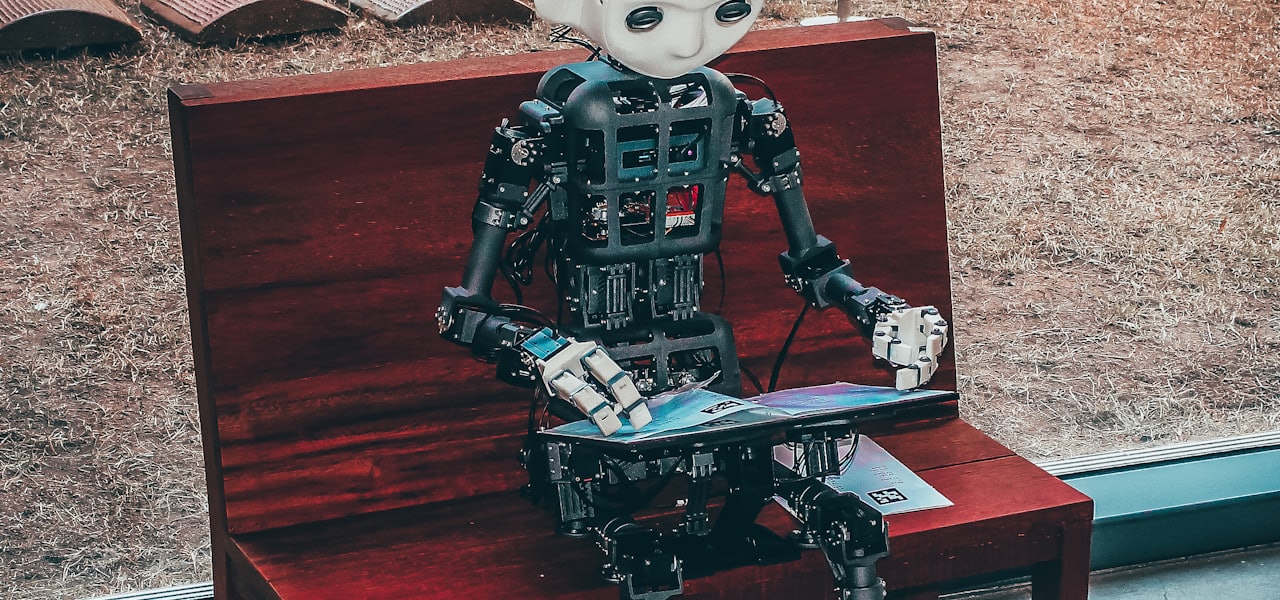
Creepiness is the state of being creepy, or causing an unpleasant feeling of fear or unease to someone and/or something. Certain traits or hobbies may make people seem creepy to others; interest in horror or the macabre might come across as 'creepy', and often people who are perverted or exhibit predatory behavior are called 'creeps'. The internet, especially some functions of social media, has been described as increasingly creepy. Adam Kotsko has compared the modern conception of creepiness to the Freudian concept of unheimlich. The term has also been used to describe paranormal or supernatural phenomena. Some people have phobias which are irrational fears, which can make them perceive something as creepy. == History and studies == "Creepiness" is subjective: for example some dolls have been described as creepy, while what makes something "creepy" or "strange" to someone might seem normal to someone else. The adjective "creepy", referring to a feeling of creeping in the flesh, was first used in 1831, but it was Charles Dickens who coined and popularized the term "the creeps" in his 1849 novel David Copperfield. In the 20th century, association was made between involuntary celibacy and creepiness. The concept of creepiness has only recently been formally addressed in social media marketing. The sensation of creepiness has only recently been the subject of psychological research, despite the widespread colloquial use of the word throughout the years. Francis T. McAndrew of Knox College is the first psychologist to do an empirical study on creepiness. == Causes == The state of creepiness has been associated with "feeling scared, nervous, anxious or worried", "awkward or uncomfortable", "vulnerable or violated" in a study conducted by Watt et al. This state arises in the presence of a creepy element, which can be an individual or, as recently observed, new technologies. === Individuals === Creepiness can be caused by the appearance of an individual. Another study investigated the characteristics that make people creepy. Creepy people were thought to be more often male than female by an overwhelming majority of participants (around 95% of both male and female participants). Another study conducted by Watt et al. also found that participants associated the ectomorphic body type (more linear) with creepiness, more than the other two body types (51% vs mesomorphic, 24% and endomorphic, 23%). Other cues of creepiness included low hygiene, especially according to female participants, and a disheveled appearance. Participants also identified the face as an area with potentially creepy features: in particular the eyes and the teeth. Both of those physical features were deemed creepy not only for their unpleasant appearance (ex. squinty eyes or crooked teeth) but also for the movements and expressions they engaged it (ex. darting eye movements and odd smiles). In fact, appearance does not seem to be the only factor making an individual creepy: behaviors provide cues as well. Behaviors such as "being unusually quiet and staring (34%), following or lurking (15%), behaving abnormally (21%), or in a socially awkward, "sketchy" or suspicious way (20%)" are all contributing to a feeling of creepiness, as described by Watt et al.'s study. === Technology === In addition to other individuals, new technologies, such as marketing's targeted ads and AI, have been qualified as creepy. A study by Moore et al. described what aspect of marketing participants considered creepy. The main three reasons are the following: using invasive tactics, causing discomfort and violating of norms. Invasive tactics are practiced by marketers that know so much about the consumer that the ads are "creepily" personalized. Secondly, some ads create discomfort by making the consumer question "the motives of the company advertising the product". Finally, some ads violate social norms by having inappropriate content, for example by unnecessarily sexualizing it. It is marketing's extensive knowledge used in an improper way, together with a certain loss of control over our data, that creates a feeling of creepiness. Another creepy aspect of technology is human-looking AI: this phenomenon is called the uncanny valley. Humans find robots creepy when they start closely resembling humans. It has been hypothesized that the reason why they are viewed as creepy is because they violate our notion of how a robot should look. A study focusing on children's responses to this phenomenon found evidence to support the hypothesis. == Evolutionary explanation == Several studies have hypothesized that creepiness is an evolutionary response to potentially dangerous situations. It could be linked to a mechanism called agent detection which makes individuals expect malignant agents to be responsible for small changes in the environment. McAndrew et al. illustrates the idea with the example of a person hearing some noises while walking in a dark alley. That person would go in high alert, fearing that some dangerous individual was there. If that was not the case the loss would be small. If, on the other hand, a dangerous individual was actually in the alley and the person had not been alerted by this creepy feeling, the loss could have been significant. Creepiness would therefore serve the purpose of alerting us in situations in which the danger is not outright obvious but rather ambiguous. In this case, ambiguity both refers to the possible presence of a threat and to its nature, sexual or physical for example. Creepiness "may reside in between the unknowing and the fear" in the sense that individuals experiencing it are unsure if there truly is something to fear or not. Creepy characteristics are not simply caused by threat potential: in fact, ectomorphic body types are not the most powerful bodies and facial expressions are not a proxy of physical strength either. Therefore, creepiness is not only related to how threatening a characteristic is, in the sense of how dangerous and strong the individual can be. There are more facets to consider. Another characteristic of creepiness is unpredictable behavior. Unpredictability links back to this idea of ambiguity. When an individual is unpredictable it is not possible to tell when their behavior will turn violent: this adds to the ambiguity of a potentially dangerous situation. This theory is endorsed by studies. Not only is unpredictability directly listed as a creepy characteristic, but other behaviors, such as norm-breaking behaviors are indirectly linked with unpredictability. Such behaviors show that the individual does not conform to some social standards others would expect in a given situation. For example, the aforementioned staring at strangers or lack of hygiene—behaviors that make us uneasy or creeped out because they do not fit the norm and therefore are not expected. More generally, participants tended to define creepiness as "different" in the sense of not behaving, or looking, socially acceptable. Such differences point towards a "social mismatch". Humans have a natural system of detection of such mismatch: a physical feeling of coldness. When an individual is creeped out, they report feeling those "cold chills". This phenomenon has been studied by Leander et al, with relation to nonverbal mimicry in social interactions, meaning the unintentional copying of another's behavior. Inappropriate mimicry may leave a person feeling like something is off about the other. Absence of non-verbal mimicry in a friendly interaction, or the presence of it in a professional setting, raises suspicion as it does not follow the relevant social norms. Individuals are left wondering what other unusual behavior the other might engage in.