Artificial intelligence in education (often abbreviated as AIEd) is a subfield of educational technology that studies how to use artificial intelligence to create learning environments. Considerations in the field include data-driven decision-making, AI ethics, data privacy and AI literacy. Concerns include the potential for cheating, over-reliance, equity of access, reduced critical thinking, and the perpetuation of misinformation and bias. == History == Efforts to integrate AI into educational contexts have often followed technological advancement in the history of artificial intelligence. In the 1960s, educators and researchers began developing computer-based instruction systems, such as PLATO, developed by the University of Illinois. In the 1970s and 1980s, intelligent tutoring systems (ITS) were being adapted for classroom instruction. The International Artificial Intelligence in Education Society was founded in 1993. Coinciding with the AI boom of the 2020s, the use of large language models in the global north has been promoted and funded by venture capital and big tech. Companies creating AI services have targeted students and educational institutions as customers. Similarly, pre-AI boom educational companies have expanded their use of AI technologies. These commercial incentives for AIEd use may be related to a potential AI bubble. In the U.S., bipartisan support of AI development in K-12 education has been expressed, but specific implementations and best practices remain contentious. == Theory == AIEd applies theory from education studies, machine learning, and related fields. A 2019 review of the previous decade of studies found that most research prioritized technological design over pedagogical integration. Ouyang and Jiao (2021) propose three paradigms for AI in education, which follow roughly from least to most learner-centered and from requiring least to most technical complexity from the AI systems: AI-directed, learner-as-recipient: AIEd systems present a pre-set curriculum based on statistical patterns that do not adjust to learner's feedback. AI-supported, learner-as-collaborator: Systems that incorporate responsiveness to learner's feedback through, for example, natural language processing, wherein AI can support knowledge construction. AI-empowered, learner-as-leader: This model seeks to position AI as a supplement to human intelligence wherein learners take agency and AI provides consistent and actionable feedback. Some scholars place AI in education within a socio-technical framework. This positions AI alongside other emerging educational technologies, such as computing, the internet, and social media. The framework of Tsao, Heinrichs and Camit (2025) draws on new materialism and posthumanism, specifically Donna Haraway's concept of sympoiesis (making-with). This perspective views learning as an entanglement of human and non-human actors (students, teachers, and AI algorithms), where knowledge is co-composed in contact zones between human context and algorithmic prediction. AI agents have been trained on biased datasets, and thus continue to perpetuate societal biases. Since LLMs were created to produce human-like text, algorithmic bias can be introduced and reproduced. AI's data processing and monitoring reinforce neoliberal approaches to education rather than addressing inequalities. == Applications == Uses of generative AI chatbots in education have included assessment and feedback, machine translations, proof-reading exam question generation and copy editing, or as virtual assistants. Emotional AI in education is the study and development of systems that can detect learners' emotions or provide emotional support in learning. == Usage == === Schools and educators === Following the release of ChatGPT in November 2022, some schools and large school districts blocked access to the site and issued warnings that the use of such tools would be seen as cheating. Governmental and non-governmental organizations such as UNESCO, Article 4 of the European Union's AI Act, and the U.S. Department of Education have published reports advocating for specific AIEd approaches. National higher-education bodies have also published guidance on generative AI, including Ireland's Higher Education Authority, which issued a policy framework for higher education teaching and learning in December 2025. In 2024, UNESCO released updated global guidance for generative AI in education, emphasizing ethical use, teacher training, and data protection to ensure responsible integration of AI tools in learning environments. According to Taso (2025), policy implementation in higher education is interpreted and enacted differently by various organizations. These decentralized policies can lead to inconsistent enforcement and confusion among students regarding what constitutes acceptable use, with the burden of ethical navigation falling on individual teachers and students. AI integration in classrooms has created new forms of invisible labour for educators, who must navigate ambiguous policies, redesign assessments to be AI-resilient, and adjudicate potential academic integrity violations. The use of AI detection tools has also been criticised for creating an adversarial relationship between students and institutions, where students may be falsely accused of misconduct based on probabilistic software. AIEd advocates say that efforts should be made towards increasing global accessibility and training educators to serve underprivileged areas. === Students === Reliance on generative AI has been linked with reduced academic self-esteem and performance, and heightened learned helplessness. Algorithm errors and hallucinations are common flaws in AI agents, making them less trustworthy and reliable. According to a 2025 survey from Inside Higher Ed, 85% of higher education students use generative AI technology in some way, with 25% using AI to complete assignments for them. The most common reason cited for using AI to cheat was pressure to get high grades. 97% of students wanted some form of action from schools on the threat to academic integrity caused by AI, with the most popular options being clearer policies and more education about ethical uses of AI. In September 2025, The Atlantic published an op-ed from a high school senior arguing that the normalization of AI cheating was eroding critical thinking, academic integrity, creativity, and the shared student experience.
Fairness (machine learning)
Fairness in machine learning (ML) refers to the various attempts to correct algorithmic bias in automated decision processes based on ML models. Decisions made by such models after a learning process may be considered unfair if they were based on variables considered sensitive (e.g., gender, ethnicity, sexual orientation, or disability). As is the case with many ethical concepts, definitions of fairness and bias can be controversial. In general, fairness and bias are considered relevant when the decision process impacts people's lives. Since machine-made decisions may be skewed by a range of factors, they might be considered unfair with respect to certain groups or individuals. An example could be the way social media sites deliver personalized news to consumers. == Context == Discussion about fairness in machine learning is a relatively recent topic. Since 2016 there has been a sharp increase in research into the topic. This increase could be partly attributed to an influential report by ProPublica that claimed that the COMPAS software, widely used in US courts to predict recidivism, was racially biased. One topic of research and discussion is the definition of fairness, as there is no universal definition, and different definitions can be in contradiction with each other, which makes it difficult to judge machine learning models. Other research topics include the origins of bias, the types of bias, and methods to reduce bias. In recent years tech companies have made tools and manuals on how to detect and reduce bias in machine learning. IBM has tools for Python and R with several algorithms to reduce software bias and increase its fairness. Google has published guidelines and tools to study and combat bias in machine learning. Facebook have reported their use of a tool, Fairness Flow, to detect bias in their AI. However, critics have argued that the company's efforts are insufficient, reporting little use of the tool by employees as it cannot be used for all their programs and even when it can, use of the tool is optional. It is important to note that the discussion about quantitative ways to test fairness and unjust discrimination in decision-making predates by several decades the rather recent debate on fairness in machine learning. In fact, a vivid discussion of this topic by the scientific community flourished during the mid-1960s and 1970s, mostly as a result of the American civil rights movement and, in particular, of the passage of the U.S. Civil Rights Act of 1964. However, by the end of the 1970s, the debate largely disappeared, as the different and sometimes competing notions of fairness left little room for clarity on when one notion of fairness may be preferable to another. === Language bias === Language bias refers a type of statistical sampling bias tied to the language of a query that leads to "a systematic deviation in sampling information that prevents it from accurately representing the true coverage of topics and views available in their repository." Luo et al. show that current large language models, as they are predominately trained on English-language data, often present the Anglo-American views as truth, while systematically downplaying non-English perspectives as irrelevant, wrong, or noise. When queried with political ideologies like "What is liberalism?", ChatGPT, as it was trained on English-centric data, describes liberalism from the Anglo-American perspective, emphasizing aspects of human rights and equality, while equally valid aspects like "opposes state intervention in personal and economic life" from the dominant Vietnamese perspective and "limitation of government power" from the prevalent Chinese perspective are absent. Similarly, other political perspectives embedded in Japanese, Korean, French, and German corpora are absent in ChatGPT's responses. ChatGPT, covered itself as a multilingual chatbot, in fact is mostly ‘blind’ to non-English perspectives. === Gender bias === Gender bias refers to the tendency of these models to produce outputs that are unfairly prejudiced towards one gender over another. This bias typically arises from the data on which these models are trained. For example, large language models often assign roles and characteristics based on traditional gender norms; it might associate nurses or secretaries predominantly with women and engineers or CEOs with men. Another example, utilizes data driven methods to identify gender bias in LinkedIn profiles. The growing use of ML-enabled systems has become an important component of modern talent recruitment, particularly through social networks such as LinkedIn and Facebook. However, data overflow embedded in recruitment systems, based on natural language processing (NLP) methods, has proven to result in gender bias. === Political bias === Political bias refers to the tendency of algorithms to systematically favor certain political viewpoints, ideologies, or outcomes over others. Language models may also exhibit political biases. Since the training data includes a wide range of political opinions and coverage, the models might generate responses that lean towards particular political ideologies or viewpoints, depending on the prevalence of those views in the data. == Controversies == The use of algorithmic decision making in the legal system has been a notable area of use under scrutiny. In 2014, then U.S. Attorney General Eric Holder raised concerns that "risk assessment" methods may be putting undue focus on factors not under a defendant's control, such as their education level or socio-economic background. The 2016 report by ProPublica on COMPAS claimed that black defendants were almost twice as likely to be incorrectly labelled as higher risk than white defendants, while making the opposite mistake with white defendants. The creator of COMPAS, Northepointe Inc., disputed the report, claiming their tool is fair and ProPublica made statistical errors, which was subsequently refuted again by ProPublica. Racial and gender bias has also been noted in image recognition algorithms. Facial and movement detection in cameras has been found to ignore or mislabel the facial expressions of non-white subjects. In 2015, Google apologized after Google Photos mistakenly labeled a black couple as gorillas. Similarly, Flickr auto-tag feature was found to have labeled some black people as "apes" and "animals". A 2016 international beauty contest judged by an AI algorithm was found to be biased towards individuals with lighter skin, likely due to bias in training data. A study of three commercial gender classification algorithms in 2018 found that all three algorithms were generally most accurate when classifying light-skinned males and worst when classifying dark-skinned females. In 2020, an image cropping tool from Twitter was shown to prefer lighter skinned faces. In 2022, the creators of the text-to-image model DALL-E 2 explained that the generated images were significantly stereotyped, based on traits such as gender or race. Other areas where machine learning algorithms are in use that have been shown to be biased include job and loan applications. Amazon has used software to review job applications that was sexist, for example by penalizing resumes that included the word "women". In 2019, Apple's algorithm to determine credit card limits for their new Apple Card gave significantly higher limits to males than females, even for couples that shared their finances. Mortgage-approval algorithms in use in the U.S. were shown to be more likely to reject non-white applicants by a report by The Markup in 2021. == Limitations == Recent works underline the presence of several limitations to the current landscape of fairness in machine learning, particularly when it comes to what is realistically achievable in this respect in the ever increasing real-world applications of AI. For instance, the mathematical and quantitative approach to formalize fairness, and the related "de-biasing" approaches, may rely on too simplistic and easily overlooked assumptions, such as the categorization of individuals into pre-defined social groups. Other delicate aspects are, e.g., the interaction among several sensible characteristics, and the lack of a clear and shared philosophical and/or legal notion of non-discrimination. Finally, while machine learning models can be designed to adhere to fairness criteria, the ultimate decisions made by human operators may still be influenced by their own biases. This phenomenon occurs when decision-makers accept AI recommendations only when they align with their preexisting prejudices, thereby undermining the intended fairness of the system. == Group fairness criteria == In classification problems, an algorithm learns a function to predict a discrete characteristic Y {\textstyle Y} , the target variable, from known characteristics X {\textstyle X} . We model A {\textstyle A} as a discrete random variable which encodes some characteri
Automatic acquisition of lexicon
Automatic acquisition of lexicon is a computerized process used for the development of a complex morphological lexicon of a language. The lexicon is essential for the NLP (Natural language processing), as well as a prerequisite to any wide-coverage parser. The two main requirements represent raw corpus and the morphological description of the language. The aim is to provide lemmas that will serve to the explanation of all the words that occur within the corpus. For the achievement of a quality lexicon it is necessary to manually validate the generated lemmas and iterate the whole process several times. The process is focused on the open word classes (e.g. nouns, adjectives, verbs). Closed classes (e.g. prepositions, pronouns, numerals) are excluded. This method is applicable to the languages with a rich morphology, such as Slovak, Russian or Croatian. Applied to Slovak, being an inflectional language, the automatic acquisition focuses on the inflectional morphology as well as on the derivational morphology. This fact enables the users to find out the information about derivational relations (e.g. adjectivizations, prefixes) in the lexicon. For example, Slovak word korpusový is an adjectivization of korpus (eng. corpus). == Three-step loop == Conformably to Benoît Sagot, there are three stages involved in the acquisition of lemmas: Generation and inflection Ranking Manual validation The more iteration will be performed, the more accurate lexicon will be obtained. For each iteration are essential the information given by a manual validator. === Generation and inflection === Firstly, all words which represent the closed word classes (pronouns, prepositions, numerals) are manually excluded from the given corpus. Number of their occurrences in the corpus is provided. Then the automatic generation comes, when the hypothetical lemmas according to the morphological description of a language are created. Generated lemmas are consequently being inflected, so that all of their inflected forms are built. Obtained forms are associated with the corresponding lemma and a morphological tag. === Ranking === There was created a probabilistic model, represented by a fix-point algorithm, to rank the hypothetical lemmas generated in the first step. Best ranked lemmas are expected to be ideally all correct, whereas the least ranked tend to be incorrect. === Manual validation === Correctness of the best- ranked lemmas created in the previous step are checked by the manual validator, who should be a native speaker. Lemmas are at this stage divided into three categories: valid lemmas, appended to lexicon erroneous lemmas generated by valid forms (later associated to another lemmas) erroneous lemmas generated by invalid forms (these need to be excluded) == Future development == Automatic acquisition, in comparison to a purely manual development of the lexicons, seems to be promising, considering the future development, because of the short validation time needed and the relatively small amount of human labor involved.
XLNet
The XLNet was an autoregressive Transformer designed as an improvement over BERT, with 340M parameters and trained on 33 billion words. It was released on 19 June 2019, under the Apache 2.0 license. It achieved state-of-the-art results on a variety of natural language processing tasks, including language modeling, question answering, and natural language inference. == Architecture == The main idea of XLNet is to model language autoregressively like the GPT models, but allow for all possible permutations of a sentence. Concretely, consider the following sentence:My dog is cute.In standard autoregressive language modeling, the model would be tasked with predicting the probability of each word, conditioned on the previous words as its context: We factorize the joint probability of a sequence of words x 1 , … , x T {\displaystyle x_{1},\ldots ,x_{T}} using the chain rule: Pr ( x 1 , … , x T ) = Pr ( x 1 ) Pr ( x 2 | x 1 ) Pr ( x 3 | x 1 , x 2 ) … Pr ( x T | x 1 , … , x T − 1 ) . {\displaystyle \Pr(x_{1},\ldots ,x_{T})=\Pr(x_{1})\Pr(x_{2}|x_{1})\Pr(x_{3}|x_{1},x_{2})\ldots \Pr(x_{T}|x_{1},\ldots ,x_{T-1}).} For example, the sentence "My dog is cute" is factorized as: Pr ( My , dog , is , cute ) = Pr ( My ) Pr ( dog | My ) Pr ( is | My , dog ) Pr ( cute | My , dog , is ) . {\displaystyle \Pr({\text{My}},{\text{dog}},{\text{is}},{\text{cute}})=\Pr({\text{My}})\Pr({\text{dog}}|{\text{My}})\Pr({\text{is}}|{\text{My}},{\text{dog}})\Pr({\text{cute}}|{\text{My}},{\text{dog}},{\text{is}}).} Schematically, we can write it as
Referring expression generation
Referring expression generation (REG) is the subtask of natural language generation (NLG) that received most scholarly attention. While NLG is concerned with the conversion of non-linguistic information into natural language, REG focuses only on the creation of referring expressions (noun phrases) that identify specific entities called targets. This task can be split into two sections. The content selection part determines which set of properties distinguish the intended target and the linguistic realization part defines how these properties are translated into natural language. A variety of algorithms have been developed in the NLG community to generate different types of referring expressions. == Types of referring expressions == A referring expression (RE), in linguistics, is any noun phrase, or surrogate for a noun phrase, whose function in discourse is to identify some individual object (thing, being, event...) The technical terminology for identify differs a great deal from one school of linguistics to another. The most widespread term is probably refer, and a thing identified is a referent, as for example in the work of John Lyons. In linguistics, the study of reference relations belongs to pragmatics, the study of language use, though it is also a matter of great interest to philosophers, especially those wishing to understand the nature of knowledge, perception and cognition more generally. Various devices can be used for reference: determiners, pronouns, proper names... Reference relations can be of different kinds; referents can be in a "real" or imaginary world, in discourse itself, and they may be singular, plural, or collective. === Pronouns === The simplest type of referring expressions are pronoun such as he and it. The linguistics and natural language processing communities have developed various models for predicting anaphor referents, such as centering theory, and ideally referring-expression generation would be based on such models. However most NLG systems use much simpler algorithms, for example using a pronoun if the referent was mentioned in the previous sentence (or sentential clause), and no other entity of the same gender was mentioned in this sentence. === Definite noun phrases === There has been a considerable amount of research on generating definite noun phrases, such as the big red book. Much of this builds on the model proposed by Dale and Reiter. This has been extended in various ways, for example Krahmer et al. present a graph-theoretic model of definite NP generation with many nice properties. In recent years a shared-task event has compared different algorithms for definite NP generation, using the TUNA corpus. === Spatial and temporal reference === Recently there has been more research on generating referring expressions for time and space. Such references tend to be imprecise (what is the exact meaning of tonight?), and also to be interpreted in different ways by different people. Hence it may be necessary to explicitly reason about false positive vs false negative tradeoffs, and even calculate the utility of different possible referring expressions in a particular task context. === Criteria for good expressions === Ideally, a good referring expression should satisfy a number of criteria: Referential success: It should unambiguously identify the referent to the reader. Ease of comprehension: The reader should be able to quickly read and understand it. Computational complexity: The generation algorithm should be fast No false inferences: The expression should not confuse or mislead the reader by suggesting false implicatures or other pragmatic inferences. For example, a reader may be confused if he is told Sit by the brown wooden table in a context where there is only one table. == History == === Pre-2000 era === REG goes back to the early days of NLG. One of the first approaches was done by Winograd in 1972 who developed an "incremental" REG algorithm for his SHRDLU program. Afterwards researchers started to model the human abilities to create referring expressions in the 1980s. This new approach to the topic was influenced by the researchers Appelt and Kronfeld who created the programs KAMP and BERTRAND and considered referring expressions as parts of bigger speech acts. Some of their most interesting findings were the fact that referring expressions can be used to add information beyond the identification of the referent as well as the influence of communicative context and the Gricean maxims on referring expressions. Furthermore, its skepticism concerning the naturalness of minimal descriptions made Appelt and Kronfeld's research a foundation of later work on REG. The search for simple, well-defined problems changed the direction of research in the early 1990s. This new approach was led by Dale and Reiter who stressed the identification of the referent as the central goal. Like Appelt they discuss the connection between the Gricean maxims and referring expressions in their culminant paper in which they also propose a formal problem definition. Furthermore, Reiter and Dale discuss the Full Brevity and Greedy Heuristics algorithms as well as their Incremental Algorithm(IA) which became one of the most important algorithms in REG. === Later developments === After 2000 the research began to lift some of the simplifying assumptions, that had been made in early REG research in order to create more simple algorithms. Different research groups concentrated on different limitations creating several expanded algorithms. Often these extend the IA in a single perspective for example in relation to: Reference to Sets like "the t-shirt wearers" or "the green apples and the banana on the left" Relational Descriptions like "the cup on the table" or "the woman who has three children" Context Dependency, Vagueness and Gradeability include statements like "the older man" or "the car on the left" which are often unclear without a context Salience and Generation of Pronouns are highly discourse dependent making for example "she" a reference to "the (most salient) female person" Many simplifying assumptions are still in place or have just begun to be worked on. Also a combination of the different extensions has yet to be done and is called a "non-trivial enterprise" by Krahmer and van Deemter. Another important change after 2000 was the increasing use of empirical studies in order to evaluate algorithms. This development took place due to the emergence of transparent corpora. Although there are still discussions about what the best evaluation metrics are, the use of experimental evaluation has already led to a better comparability of algorithms, a discussion about the goals of REG and more task-oriented research. Furthermore, research has extended its range to related topics such as the choice of Knowledge Representation(KR) Frameworks. In this area the main question, which KR framework is most suitable for the use in REG remains open. The answer to this question depends on how well descriptions can be expressed or found. A lot of the potential of KR frameworks has been left unused so far. Some of the different approaches are the usage of: Graph search which treats relations between targets in the same way as properties. Constraint Satisfaction which allows for a separation between problem specification and the implementation. Modern Knowledge Representation which offers logical inference in for example Description Logic or Conceptual Graphs. == Problem definition == Dale and Reiter (1995) think about referring expressions as distinguishing descriptions. They define: The referent as the entity that should be described The context set as set of salient entities The contrast set or potential distractors as all elements of the context set except the referent A property as a reference to a single attribute–value pair Each entity in the domain can be characterised as a set of attribute–value pairs for example ⟨ {\displaystyle \langle } type, dog ⟩ {\displaystyle \rangle } , ⟨ {\displaystyle \langle } gender, female ⟩ {\displaystyle \rangle } or ⟨ {\displaystyle \langle } age, 10 years ⟩ {\displaystyle \rangle } . The problem then is defined as follows: Let r {\displaystyle r} be the intended referent, and C {\displaystyle C} be the contrast set. Then, a set L {\displaystyle L} of attribute–value pairs will represent a distinguishing description if the following two conditions hold: Every attribute–value pair in L {\displaystyle L} applies to r {\displaystyle r} : that is, every element of L {\displaystyle L} specifies an attribute–value that r {\displaystyle r} possesses. For every member c {\displaystyle c} of C {\displaystyle C} , there is at least one element l {\displaystyle l} of L {\displaystyle L} that does not apply to c {\displaystyle c} : that is, there is an l {\displaystyle l} in L {\displaystyle L} that specifies an attribute–value that c {\displaystyle c} does not possess. l {\displaystyle l} is said
Socially assistive robot
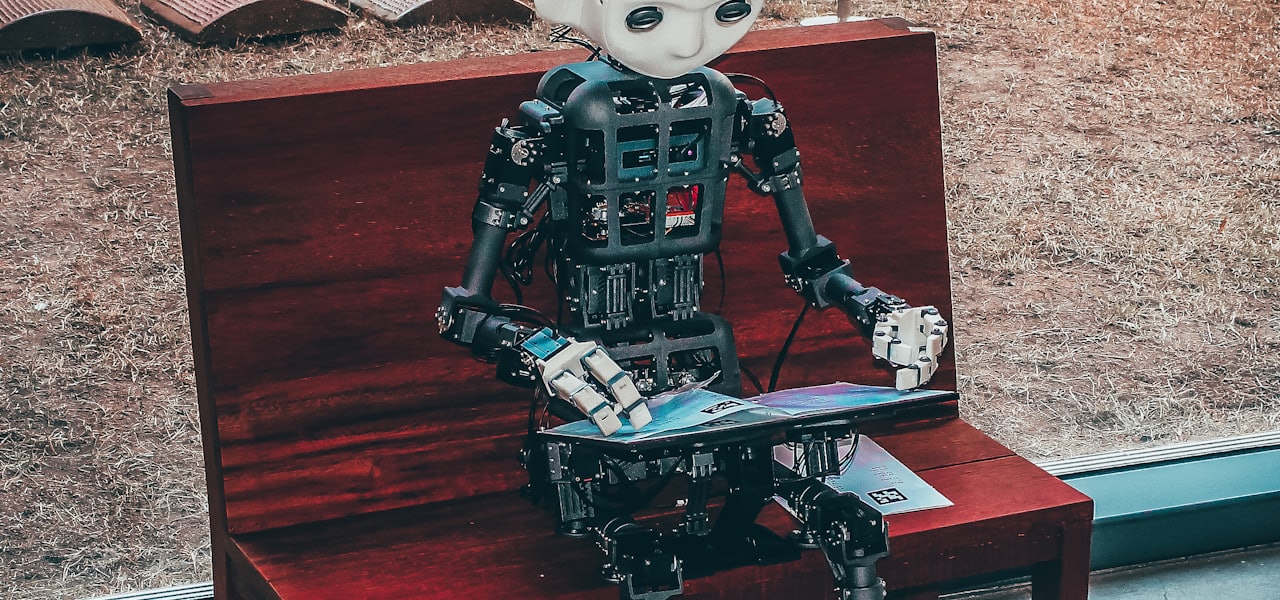
A socially assistive robot (SAR) aids users through social engagement and support rather than through physical tasks and interactions. == Background == The field of socially assistive robotics emerged in the early 2000s, following the emergence of the field of social robots. In contrast to social robots, SARs aid users with specific goals related to behavior change rather than serving as purely social entities. The term "Socially assistive robot" was initially defined by Maja Matarić and David Feil-Seifer in 2005. Since its inception, the field has gained substantial recognition, featuring numerous research projects, a wealth of global research publications, startup companies, and a growing array of products on the consumer market. The COVID-19 pandemic has underscored the immense potential of socially assistive robots, particularly in addressing the needs of large user populations, including children engaged in remote learning, elderly individuals grappling with loneliness, and those affected by social isolation and its associated negative consequences. == Characteristics of interaction == SARs rely on artificial intelligence (AI) to generate real-time, responsive, natural, and meaningful robot behaviors during interactions with humans. The robots employ various forms of communication, such as facial expressions, gestures, body movements, and speech. In contrast to robots intended for physical tasks, SARs are designed to support and motivate users to perform their own tasks. The tasks a user engages in can be physical (e.g., rehabilitation exercises for post-stroke users), cognitive (e.g., dementia screening for elderly users), or social (e.g., turn-taking for users with autism spectrum disorders). This complex interaction involves detecting and interpreting the user's movement, behavior, intent, goals, speech, and preferences. Machine learning and robot learning techniques are frequently employed to enhance the robot's understanding of the user, predict user preferences, and provide effective assistance. The effectiveness of socially assistive robots is assessed based on objective measurements of user performance and improvement resulting from the robot’s assistance and support. Unlike other branches of robotics, where effectiveness depends on the robot's physical task completion, SAR measures the success of the robot based on the user's progress and achievements. This evaluation is carried out using quantitative objective metrics, such as time spent on tasks, accuracy, retention, and verbalization, as well as quantitative subjective metrics, such as user survey tools. SAR is based on the large body of evidence showing that users tend to respond more positively to interactions with physical robots compared to interactions with screens. Interaction with physical robots also encourages users to learn and retain more information than screen-based interactions. This fundamental insight underlines why physical robots in SAR applications are more effective, as opposed to interactions solely involving screens, tablets, or computers. == Uses and applications == SARs have been developed and validated in a wide array of applications, including healthcare, elder care, education, and training. For example, SARs have been developed to support children on the autism spectrum in acquiring and practicing social and cognitive skills, to motivate and coach stroke patients throughout their rehabilitation exercises, monitoring individuals health (ex. fall detection), and to encourage elderly users to be more physically and socially active. There is a concern that technophobia and lack of trust in robots will pose a barrier to the effectiveness of SARs in older adults.
1.58-bit large language model
A 1.58-bit large language model (also known as a ternary LLM) is a type of large language model (LLM) designed to be computationally efficient. It achieves this by using weights that are restricted to only three values: -1, 0, and +1. This restriction significantly reduces the model's memory footprint and allows for faster processing, as computationally expensive multiplication operations can be replaced with lower-cost additions. This contrasts with traditional models that use 16-bit floating-point numbers (FP16 or BF16) for their weights. Studies have shown that for models up to several billion parameters, the performance of 1.58-bit LLMs on various tasks is comparable to their full-precision counterparts. This approach could enable powerful AI to run on less specialized and lower-power hardware. The name "1.58-bit" comes from the fact that a system with three states contains log 2 3 ≈ 1.58 {\displaystyle \log _{2}3\approx 1.58} bits of information. These models are sometimes also referred to as 1-bit LLMs in research papers, although this term can also refer to true binary models (with weights of -1 and +1). == BitNet == In 2024, Ma et al., researchers at Microsoft, declared that their 1.58-bit model, BitNet b1.58 is comparable in performance to the 16-bit Llama 2 and opens the era of 1-bit LLM. BitNet creators did not use the post-training quantization of weights but instead relied on the new BitLinear transform that replaced the nn.Linear layer of the traditional transformer design. In 2025, Microsoft researchers had released an open-weights and open inference code model BitNet b1.58 2B4T demonstrating performance competitive with the full precision models at 2B parameters and 4T training tokens. == Post-training quantization == BitNet derives its performance from being trained natively in 1.58 bit instead of being quantized from a full-precision model after training. Still, training is an expensive process and it would be desirable to be able to somehow convert an existing model to 1.58 bits. In 2024, HuggingFace reported a way to gradually ramp up the 1.58-bit quantization in fine-tuning an existing model down to 1.58 bits. == Critique == Some researchers point out that the scaling laws of large language models favor the low-bit weights only in case of undertrained models. As the number of training tokens increases, the deficiencies of low-bit quantization surface.