AI Chat Kya Hai

AI Chat Kya Hai — independent reviews, comparisons, pricing and step-by-step guides on Aizhi.

  • The Business Cloud

    The Business Cloud

    The Business Cloud is an API enabled self-service platform, developed by Domo, that provides an array of services like data connection and data visualization. == History == Domo, Inc. was founded in 2010 by Josh James who also co-founded the web analytics software company Omniture in 1996, which he took public in 2006. Domo launched the Domo Appstore, with 1,000 apps with social and mobile capabilities, in 2016. This appstore creates a network of business apps and an ecosystem of companies into a single, integrated business cloud. This decision came after Domo announced a $131 million round of funding from BlackRock. According to the company, the concept behind The Business Cloud is to connect smaller clouds relating to apps or other functional areas of a business into a single business cloud that allows self-service and other social features to customers. == Services == The Business Cloud is offered as a free service, claimed to be the world's first business cloud with Domo appstore as one of its core services. This free package includes all of the Domo's features and functionality including Domo platform, Domo Apps, visualizations, alerts, company directories, org charts, profiles, tasks and Domo Mobile. The Business Cloud allows customers to leverage their preferred cloud as well as on-premises software and monitor all aspects of their business in routine. The company is supported by a $500 million fund from investors all over the world.

    Read more →
  • AdaBoost

    AdaBoost

    AdaBoost (short for Adaptive Boosting) is a statistical classification meta-algorithm formulated by Yoav Freund and Robert Schapire in 1995, who won the 2003 Gödel Prize for their work. It can be used in conjunction with many types of learning algorithm to improve performance. The output of multiple weak learners is combined into a weighted sum that represents the final output of the boosted classifier. Usually, AdaBoost is presented for binary classification, although it can be generalized to multiple classes or bounded intervals of real values. AdaBoost is adaptive in the sense that subsequent weak learners (models) are adjusted in favor of instances misclassified by previous models. In some problems, it can be less susceptible to overfitting than other learning algorithms. The individual learners can be weak, but as long as the performance of each one is slightly better than random guessing, the final model can be proven to converge to a strong learner. Although AdaBoost is typically used to combine weak base learners (such as decision stumps), it has been shown to also effectively combine strong base learners (such as deeper decision trees), producing an even more accurate model. Every learning algorithm tends to suit some problem types better than others, and typically has many different parameters and configurations to adjust before it achieves optimal performance on a dataset. AdaBoost (with decision trees as the weak learners) is often referred to as the best out-of-the-box classifier. When used with decision tree learning, information gathered at each stage of the AdaBoost algorithm about the relative 'hardness' of each training sample is fed into the tree-growing algorithm such that later trees tend to focus on harder-to-classify examples. == Training == AdaBoost refers to a particular method of training a boosted classifier. A boosted classifier is a classifier of the form F T ( x ) = ∑ t = 1 T f t ( x ) {\displaystyle F_{T}(x)=\sum _{t=1}^{T}f_{t}(x)} where each f t {\displaystyle f_{t}} is a weak learner that takes an object x {\displaystyle x} as input and returns a value indicating the class of the object. For example, in the two-class problem, the sign of the weak learner's output identifies the predicted object class and the absolute value gives the confidence in that classification. Each weak learner produces an output hypothesis h {\displaystyle h} which fixes a prediction h ( x i ) {\displaystyle h(x_{i})} for each sample in the training set. At each iteration t {\displaystyle t} , a weak learner is selected and assigned a coefficient α t {\displaystyle \alpha _{t}} such that the total training error E t {\displaystyle E_{t}} of the resulting t {\displaystyle t} -stage boosted classifier is minimized. E t = ∑ i E [ F t − 1 ( x i ) + α t h ( x i ) ] {\displaystyle E_{t}=\sum _{i}E[F_{t-1}(x_{i})+\alpha _{t}h(x_{i})]} Here F t − 1 ( x ) {\displaystyle F_{t-1}(x)} is the boosted classifier that has been built up to the previous stage of training and f t ( x ) = α t h ( x ) {\displaystyle f_{t}(x)=\alpha _{t}h(x)} is the weak learner that is being considered for addition to the final classifier. === Weighting === At each iteration of the training process, a weight w i , t {\displaystyle w_{i,t}} is assigned to each sample in the training set equal to the current error E ( F t − 1 ( x i ) ) {\displaystyle E(F_{t-1}(x_{i}))} on that sample. These weights can be used in the training of the weak learner. For instance, decision trees can be grown which favor the splitting of sets of samples with large weights. == Derivation == This derivation follows Rojas (2009): Suppose we have a data set { ( x 1 , y 1 ) , … , ( x N , y N ) } {\displaystyle \{(x_{1},y_{1}),\ldots ,(x_{N},y_{N})\}} where each item x i {\displaystyle x_{i}} has an associated class y i ∈ { − 1 , 1 } {\displaystyle y_{i}\in \{-1,1\}} , and a set of weak classifiers { k 1 , … , k L } {\displaystyle \{k_{1},\ldots ,k_{L}\}} each of which outputs a classification k j ( x i ) ∈ { − 1 , 1 } {\displaystyle k_{j}(x_{i})\in \{-1,1\}} for each item. After the ( m − 1 ) {\displaystyle (m-1)} -th iteration our boosted classifier is a linear combination of the weak classifiers of the form: C ( m − 1 ) ( x i ) = α 1 k 1 ( x i ) + ⋯ + α m − 1 k m − 1 ( x i ) , {\displaystyle C_{(m-1)}(x_{i})=\alpha _{1}k_{1}(x_{i})+\cdots +\alpha _{m-1}k_{m-1}(x_{i}),} where the class will be the sign of C ( m − 1 ) ( x i ) {\displaystyle C_{(m-1)}(x_{i})} . At the m {\displaystyle m} -th iteration we want to extend this to a better boosted classifier by adding another weak classifier k m {\displaystyle k_{m}} , with another weight α m {\displaystyle \alpha _{m}} : C m ( x i ) = C ( m − 1 ) ( x i ) + α m k m ( x i ) {\displaystyle C_{m}(x_{i})=C_{(m-1)}(x_{i})+\alpha _{m}k_{m}(x_{i})} So it remains to determine which weak classifier is the best choice for k m {\displaystyle k_{m}} , and what its weight α m {\displaystyle \alpha _{m}} should be. We define the total error E {\displaystyle E} of C m {\displaystyle C_{m}} as the sum of its exponential loss on each data point, given as follows: E = ∑ i = 1 N e − y i C m ( x i ) = ∑ i = 1 N e − y i C ( m − 1 ) ( x i ) e − y i α m k m ( x i ) {\displaystyle E=\sum _{i=1}^{N}e^{-y_{i}C_{m}(x_{i})}=\sum _{i=1}^{N}e^{-y_{i}C_{(m-1)}(x_{i})}e^{-y_{i}\alpha _{m}k_{m}(x_{i})}} Letting w i ( 1 ) = 1 {\displaystyle w_{i}^{(1)}=1} and w i ( m ) = e − y i C m − 1 ( x i ) {\displaystyle w_{i}^{(m)}=e^{-y_{i}C_{m-1}(x_{i})}} for m > 1 {\displaystyle m>1} , we have: E = ∑ i = 1 N w i ( m ) e − y i α m k m ( x i ) {\displaystyle E=\sum _{i=1}^{N}w_{i}^{(m)}e^{-y_{i}\alpha _{m}k_{m}(x_{i})}} We can split this summation between those data points that are correctly classified by k m {\displaystyle k_{m}} (so y i k m ( x i ) = 1 {\displaystyle y_{i}k_{m}(x_{i})=1} ) and those that are misclassified (so y i k m ( x i ) = − 1 {\displaystyle y_{i}k_{m}(x_{i})=-1} ): E = ∑ y i = k m ( x i ) w i ( m ) e − α m + ∑ y i ≠ k m ( x i ) w i ( m ) e α m = ∑ i = 1 N w i ( m ) e − α m + ∑ y i ≠ k m ( x i ) w i ( m ) ( e α m − e − α m ) {\displaystyle {\begin{aligned}E&=\sum _{y_{i}=k_{m}(x_{i})}w_{i}^{(m)}e^{-\alpha _{m}}+\sum _{y_{i}\neq k_{m}(x_{i})}w_{i}^{(m)}e^{\alpha _{m}}\\&=\sum _{i=1}^{N}w_{i}^{(m)}e^{-\alpha _{m}}+\sum _{y_{i}\neq k_{m}(x_{i})}w_{i}^{(m)}\left(e^{\alpha _{m}}-e^{-\alpha _{m}}\right)\end{aligned}}} Since the only part of the right-hand side of this equation that depends on k m {\displaystyle k_{m}} is ∑ y i ≠ k m ( x i ) w i ( m ) {\textstyle \sum _{y_{i}\neq k_{m}(x_{i})}w_{i}^{(m)}} , we see that the k m {\displaystyle k_{m}} that minimizes E {\displaystyle E} is the one in the set { k 1 , … , k L } {\displaystyle \{k_{1},\ldots ,k_{L}\}} that minimizes ∑ y i ≠ k m ( x i ) w i ( m ) {\textstyle \sum _{y_{i}\neq k_{m}(x_{i})}w_{i}^{(m)}} [assuming that α m > 0 {\displaystyle \alpha _{m}>0} ], i.e. the weak classifier with the lowest weighted error (with weights w i ( m ) = e − y i C m − 1 ( x i ) {\displaystyle w_{i}^{(m)}=e^{-y_{i}C_{m-1}(x_{i})}} ). To determine the desired weight α m {\displaystyle \alpha _{m}} that minimizes E {\displaystyle E} with the k m {\displaystyle k_{m}} that we just determined, we differentiate: d E d α m = d ( ∑ y i = k m ( x i ) w i ( m ) e − α m + ∑ y i ≠ k m ( x i ) w i ( m ) e α m ) d α m {\displaystyle {\frac {dE}{d\alpha _{m}}}={\frac {d(\sum _{y_{i}=k_{m}(x_{i})}w_{i}^{(m)}e^{-\alpha _{m}}+\sum _{y_{i}\neq k_{m}(x_{i})}w_{i}^{(m)}e^{\alpha _{m}})}{d\alpha _{m}}}} The value of α m {\displaystyle \alpha _{m}} that minimizes the above expression is: α m = 1 2 ln ⁡ ( ∑ y i = k m ( x i ) w i ( m ) ∑ y i ≠ k m ( x i ) w i ( m ) ) {\displaystyle \alpha _{m}={\frac {1}{2}}\ln \left({\frac {\sum _{y_{i}=k_{m}(x_{i})}w_{i}^{(m)}}{\sum _{y_{i}\neq k_{m}(x_{i})}w_{i}^{(m)}}}\right)} We calculate the weighted error rate of the weak classifier to be ϵ m = ∑ y i ≠ k m ( x i ) w i ( m ) ∑ i = 1 N w i ( m ) {\displaystyle \epsilon _{m}={\frac {\sum _{y_{i}\neq k_{m}(x_{i})}w_{i}^{(m)}}{\sum _{i=1}^{N}w_{i}^{(m)}}}} , so it follows that: α m = 1 2 ln ⁡ ( 1 − ϵ m ϵ m ) {\displaystyle \alpha _{m}={\frac {1}{2}}\ln \left({\frac {1-\epsilon _{m}}{\epsilon _{m}}}\right)} which is the negative logit function multiplied by 0.5. Due to the convexity of E {\displaystyle E} as a function of α m {\displaystyle \alpha _{m}} , this new expression for α m {\displaystyle \alpha _{m}} gives the global minimum of the loss function. Note: This derivation only applies when k m ( x i ) ∈ { − 1 , 1 } {\displaystyle k_{m}(x_{i})\in \{-1,1\}} , though it can be a good starting guess in other cases, such as when the weak learner is biased ( k m ( x ) ∈ { a , b } , a ≠ − b {\displaystyle k_{m}(x)\in \{a,b\},a\neq -b} ), has multiple leaves ( k m ( x ) ∈ { a , b , … , n } {\displaystyle k_{m}(x)\in \{a,b,\dots ,n\}} ) or is some other function k m ( x ) ∈ R {\displaystyle k_{m}(x)\in \mathbb {R} } . Thus we have derived the AdaBoost algorithm: At each

    Read more →
  • Out-of-bag error

    Out-of-bag error

    Out-of-bag (OOB) error, also called out-of-bag estimate, is a method of measuring the prediction error of random forests, boosted decision trees, and other machine learning models utilizing bootstrap aggregating (bagging). Bagging uses subsampling with replacement to create training samples for the model to learn from. OOB error is the mean prediction error on each training sample xi, using only the trees that did not have xi in their bootstrap sample. Bootstrap aggregating allows one to define an out-of-bag estimate of the prediction performance improvement by evaluating predictions on those observations that were not used in the building of the next base learner. == Out-of-bag dataset == When bootstrap aggregating is performed, two independent sets are created. One set, the bootstrap sample, is the data chosen to be "in-the-bag" by sampling with replacement. The out-of-bag set is all data not chosen in the sampling process. When this process is repeated, such as when building a random forest, many bootstrap samples and OOB sets are created. The OOB sets can be aggregated into one dataset, but each sample is only considered out-of-bag for the trees that do not include it in their bootstrap sample. The picture below shows that for each bag sampled, the data is separated into two groups. This example shows how bagging could be used in the context of diagnosing disease. A set of patients are the original dataset, but each model is trained only by the patients in its bag. The patients in each out-of-bag set can be used to test their respective models. The test would consider whether the model can accurately determine if the patient has the disease. == Calculating out-of-bag error == Since each out-of-bag set is not used to train the model, it is a good test for the performance of the model. The specific calculation of OOB error depends on the implementation of the model, but a general calculation is as follows. Find all models (or trees, in the case of a random forest) that are not trained by the OOB instance. Take the majority vote of these models' result for the OOB instance, compared to the true value of the OOB instance. Compile the OOB error for all instances in the OOB dataset. The bagging process can be customized to fit the needs of a model. To ensure an accurate model, the bootstrap training sample size should be close to that of the original set. Also, the number of iterations (trees) of the model (forest) should be considered to find the true OOB error. The OOB error will stabilize over many iterations so starting with a high number of iterations is a good idea. Shown in the example to the right, the OOB error can be found using the method above once the forest is set up. == Comparison to cross-validation == Out-of-bag error and cross-validation (CV) are different methods of measuring the error estimate of a machine learning model. Over many iterations, the two methods should produce a very similar error estimate. That is, once the OOB error stabilizes, it will converge to the cross-validation (specifically leave-one-out cross-validation) error. The advantage of the OOB method is that it requires less computation and allows one to test the model as it is being trained. == Accuracy and Consistency == Out-of-bag error is used frequently for error estimation within random forests but with the conclusion of a study done by Silke Janitza and Roman Hornung, out-of-bag error has shown to overestimate in settings that include an equal number of observations from all response classes (balanced samples), small sample sizes, a large number of predictor variables, small correlation between predictors, and weak effects.

    Read more →
  • Vowpal Wabbit

    Vowpal Wabbit

    Vowpal Wabbit (VW) is an open-source fast online interactive machine learning system library and program developed originally at Yahoo! Research, and currently at Microsoft Research. It was started and is led by John Langford. Vowpal Wabbit's interactive learning support is particularly notable including Contextual Bandits, Active Learning, and forms of guided Reinforcement Learning. Vowpal Wabbit provides an efficient scalable out-of-core implementation with support for a number of machine learning reductions, importance weighting, and a selection of different loss functions and optimization algorithms. == Notable features == The VW program supports: Multiple supervised (and semi-supervised) learning problems: Classification (both binary and multi-class) Regression Active learning (partially labeled data) for both regression and classification Multiple learning algorithms (model-types / representations) OLS regression Matrix factorization (sparse matrix SVD) Single layer neural net (with user specified hidden layer node count) Searn (Search and Learn) Latent Dirichlet Allocation (LDA) Stagewise polynomial approximation Recommend top-K out of N One-against-all (OAA) and cost-sensitive OAA reduction for multi-class Weighted all pairs Contextual-bandit (with multiple exploration/exploitation strategies) Multiple loss functions: squared error quantile hinge logistic poisson Multiple optimization algorithms Stochastic gradient descent (SGD) BFGS Conjugate gradient Regularization (L1 norm, L2 norm, & elastic net regularization) Flexible input - input features may be: Binary Numerical Categorical (via flexible feature-naming and the hash trick) Can deal with missing values/sparse-features Other features On the fly generation of feature interactions (quadratic and cubic) On the fly generation of N-grams with optional skips (useful for word/language data-sets) Automatic test-set holdout and early termination on multiple passes bootstrapping User settable online learning progress report + auditing of the model Hyperparameter optimization == Scalability == Vowpal wabbit has been used to learn a tera-feature (1012) data-set on 1000 nodes in one hour. Its scalability is aided by several factors: Out-of-core online learning: no need to load all data into memory The hashing trick: feature identities are converted to a weight index via a hash (uses 32-bit MurmurHash3) Exploiting multi-core CPUs: parsing of input and learning are done in separate threads. Compiled C++ code

    Read more →
  • Socially assistive robot

    Socially assistive robot

    A socially assistive robot (SAR) aids users through social engagement and support rather than through physical tasks and interactions. == Background == The field of socially assistive robotics emerged in the early 2000s, following the emergence of the field of social robots. In contrast to social robots, SARs aid users with specific goals related to behavior change rather than serving as purely social entities. The term "Socially assistive robot" was initially defined by Maja Matarić and David Feil-Seifer in 2005. Since its inception, the field has gained substantial recognition, featuring numerous research projects, a wealth of global research publications, startup companies, and a growing array of products on the consumer market. The COVID-19 pandemic has underscored the immense potential of socially assistive robots, particularly in addressing the needs of large user populations, including children engaged in remote learning, elderly individuals grappling with loneliness, and those affected by social isolation and its associated negative consequences. == Characteristics of interaction == SARs rely on artificial intelligence (AI) to generate real-time, responsive, natural, and meaningful robot behaviors during interactions with humans. The robots employ various forms of communication, such as facial expressions, gestures, body movements, and speech. In contrast to robots intended for physical tasks, SARs are designed to support and motivate users to perform their own tasks. The tasks a user engages in can be physical (e.g., rehabilitation exercises for post-stroke users), cognitive (e.g., dementia screening for elderly users), or social (e.g., turn-taking for users with autism spectrum disorders). This complex interaction involves detecting and interpreting the user's movement, behavior, intent, goals, speech, and preferences. Machine learning and robot learning techniques are frequently employed to enhance the robot's understanding of the user, predict user preferences, and provide effective assistance. The effectiveness of socially assistive robots is assessed based on objective measurements of user performance and improvement resulting from the robot’s assistance and support. Unlike other branches of robotics, where effectiveness depends on the robot's physical task completion, SAR measures the success of the robot based on the user's progress and achievements. This evaluation is carried out using quantitative objective metrics, such as time spent on tasks, accuracy, retention, and verbalization, as well as quantitative subjective metrics, such as user survey tools. SAR is based on the large body of evidence showing that users tend to respond more positively to interactions with physical robots compared to interactions with screens. Interaction with physical robots also encourages users to learn and retain more information than screen-based interactions. This fundamental insight underlines why physical robots in SAR applications are more effective, as opposed to interactions solely involving screens, tablets, or computers. == Uses and applications == SARs have been developed and validated in a wide array of applications, including healthcare, elder care, education, and training. For example, SARs have been developed to support children on the autism spectrum in acquiring and practicing social and cognitive skills, to motivate and coach stroke patients throughout their rehabilitation exercises, monitoring individuals health (ex. fall detection), and to encourage elderly users to be more physically and socially active. There is a concern that technophobia and lack of trust in robots will pose a barrier to the effectiveness of SARs in older adults.

    Read more →
  • Kernel method

    Kernel method

    In machine learning, kernel machines are a class of algorithms for pattern analysis, whose best known member is the support-vector machine (SVM). These methods involve using linear classifiers to solve nonlinear problems. The general task of pattern analysis is to find and study general types of relations (for example clusters, rankings, principal components, correlations, classifications) in datasets. For many algorithms that solve these tasks, the data in raw representation have to be explicitly transformed into feature vector representations via a user-specified feature map: in contrast, kernel methods require only a user-specified kernel, i.e., a similarity function over all pairs of data points computed using inner products. The feature map in kernel machines is infinite dimensional but only requires a finite dimensional matrix from user-input according to the representer theorem. Kernel machines are slow to compute for datasets larger than a couple of thousand examples without parallel processing. Kernel methods owe their name to the use of kernel functions, which enable them to operate in a high-dimensional, implicit feature space without ever computing the coordinates of the data in that space, but rather by simply computing the inner products between the images of all pairs of data in the feature space. This operation is often computationally cheaper than the explicit computation of the coordinates. This approach is called the "kernel trick". Kernel functions have been introduced for sequence data, graphs, text, images, as well as vectors. Algorithms capable of operating with kernels include the kernel perceptron, support-vector machines (SVM), Gaussian processes, principal components analysis (PCA), canonical correlation analysis, ridge regression, spectral clustering, linear adaptive filters and many others. Most kernel algorithms are based on convex optimization or eigenproblems and are statistically well-founded. Typically, their statistical properties are analyzed using statistical learning theory (for example, using Rademacher complexity). == Motivation and informal explanation == Kernel methods can be thought of as instance-based learners: rather than learning some fixed set of parameters corresponding to the features of their inputs, they instead "remember" the i {\displaystyle i} -th training example ( x i , y i ) {\displaystyle (\mathbf {x} _{i},y_{i})} and learn for it a corresponding weight w i {\displaystyle w_{i}} . Prediction for unlabeled inputs, i.e., those not in the training set, are treated by the application of a similarity function k {\displaystyle k} , called a kernel, between the unlabeled input x ′ {\displaystyle \mathbf {x'} } and each of the training inputs x i {\displaystyle \mathbf {x} _{i}} . For instance, a kernelized binary classifier typically computes a weighted sum of similarities y ^ = sgn ⁡ ∑ i = 1 n w i y i k ( x i , x ′ ) , {\displaystyle {\hat {y}}=\operatorname {sgn} \sum _{i=1}^{n}w_{i}y_{i}k(\mathbf {x} _{i},\mathbf {x'} ),} where y ^ ∈ { − 1 , + 1 } {\displaystyle {\hat {y}}\in \{-1,+1\}} is the kernelized binary classifier's predicted label for the unlabeled input x ′ {\displaystyle \mathbf {x'} } whose hidden true label y {\displaystyle y} is of interest; k : X × X → R {\displaystyle k\colon {\mathcal {X}}\times {\mathcal {X}}\to \mathbb {R} } is the kernel function that measures similarity between any pair of inputs x , x ′ ∈ X {\displaystyle \mathbf {x} ,\mathbf {x'} \in {\mathcal {X}}} ; the sum ranges over the n labeled examples { ( x i , y i ) } i = 1 n {\displaystyle \{(\mathbf {x} _{i},y_{i})\}_{i=1}^{n}} in the classifier's training set, with y i ∈ { − 1 , + 1 } {\displaystyle y_{i}\in \{-1,+1\}} ; the w i ∈ R {\displaystyle w_{i}\in \mathbb {R} } are the weights for the training examples, as determined by the learning algorithm; the sign function sgn {\displaystyle \operatorname {sgn} } determines whether the predicted classification y ^ {\displaystyle {\hat {y}}} comes out positive or negative. Kernel classifiers were described as early as the 1960s, with the invention of the kernel perceptron. They rose to great prominence with the popularity of the support-vector machine (SVM) in the 1990s, when the SVM was found to be competitive with neural networks on tasks such as handwriting recognition. == Mathematics: the kernel trick == The kernel trick avoids the explicit mapping that is needed to get linear learning algorithms to learn a nonlinear function or decision boundary. For all x {\displaystyle \mathbf {x} } and x ′ {\displaystyle \mathbf {x'} } in the input space X {\displaystyle {\mathcal {X}}} , certain functions k ( x , x ′ ) {\displaystyle k(\mathbf {x} ,\mathbf {x'} )} can be expressed as an inner product in another space V {\displaystyle {\mathcal {V}}} . The function k : X × X → R {\displaystyle k\colon {\mathcal {X}}\times {\mathcal {X}}\to \mathbb {R} } is often referred to as a kernel or a kernel function. The word "kernel" is used in mathematics to denote a weighting function for a weighted sum or integral. Certain problems in machine learning have more structure than an arbitrary weighting function k {\displaystyle k} . The computation is made much simpler if the kernel can be written in the form of a "feature map" φ : X → V {\displaystyle \varphi \colon {\mathcal {X}}\to {\mathcal {V}}} which satisfies k ( x , x ′ ) = ⟨ φ ( x ) , φ ( x ′ ) ⟩ V . {\displaystyle k(\mathbf {x} ,\mathbf {x'} )=\langle \varphi (\mathbf {x} ),\varphi (\mathbf {x'} )\rangle _{\mathcal {V}}.} The key restriction is that ⟨ ⋅ , ⋅ ⟩ V {\displaystyle \langle \cdot ,\cdot \rangle _{\mathcal {V}}} must be a proper inner product. On the other hand, an explicit representation for φ {\displaystyle \varphi } is not necessary, as long as V {\displaystyle {\mathcal {V}}} is an inner product space. The alternative follows from Mercer's theorem: an implicitly defined function φ {\displaystyle \varphi } exists whenever the space X {\displaystyle {\mathcal {X}}} can be equipped with a suitable measure ensuring the function k {\displaystyle k} satisfies Mercer's condition. Mercer's theorem is similar to a generalization of the result from linear algebra that associates an inner product to any positive-definite matrix. In fact, Mercer's condition can be reduced to this simpler case. If we choose as our measure the counting measure μ ( T ) = | T | {\displaystyle \mu (T)=|T|} for all T ⊂ X {\displaystyle T\subset X} , which counts the number of points inside the set T {\displaystyle T} , then the integral in Mercer's theorem reduces to a summation ∑ i = 1 n ∑ j = 1 n k ( x i , x j ) c i c j ≥ 0. {\displaystyle \sum _{i=1}^{n}\sum _{j=1}^{n}k(\mathbf {x} _{i},\mathbf {x} _{j})c_{i}c_{j}\geq 0.} If this summation holds for all finite sequences of points ( x 1 , … , x n ) {\displaystyle (\mathbf {x} _{1},\dotsc ,\mathbf {x} _{n})} in X {\displaystyle {\mathcal {X}}} and all choices of n {\displaystyle n} real-valued coefficients ( c 1 , … , c n ) {\displaystyle (c_{1},\dots ,c_{n})} (cf. positive definite kernel), then the function k {\displaystyle k} satisfies Mercer's condition. Some algorithms that depend on arbitrary relationships in the native space X {\displaystyle {\mathcal {X}}} would, in fact, have a linear interpretation in a different setting: the range space of φ {\displaystyle \varphi } . The linear interpretation gives us insight about the algorithm. Furthermore, there is often no need to compute φ {\displaystyle \varphi } directly during computation, as is the case with support-vector machines. Some cite this running time shortcut as the primary benefit. Researchers also use it to justify the meanings and properties of existing algorithms. Theoretically, a Gram matrix K ∈ R n × n {\displaystyle \mathbf {K} \in \mathbb {R} ^{n\times n}} with respect to { x 1 , … , x n } {\displaystyle \{\mathbf {x} _{1},\dotsc ,\mathbf {x} _{n}\}} (sometimes also called a "kernel matrix"), where K i j = k ( x i , x j ) {\displaystyle K_{ij}=k(\mathbf {x} _{i},\mathbf {x} _{j})} , must be positive semi-definite (PSD). Empirically, for machine learning heuristics, choices of a function k {\displaystyle k} that do not satisfy Mercer's condition may still perform reasonably if k {\displaystyle k} at least approximates the intuitive idea of similarity. Regardless of whether k {\displaystyle k} is a Mercer kernel, k {\displaystyle k} may still be referred to as a "kernel". If the kernel function k {\displaystyle k} is also a covariance function as used in Gaussian processes, then the Gram matrix K {\displaystyle \mathbf {K} } can also be called a covariance matrix. == Applications == Application areas of kernel methods are diverse and include geostatistics, kriging, inverse distance weighting, 3D reconstruction, bioinformatics, cheminformatics, information extraction and handwriting recognition. == Popular kernels == Fisher kernel Graph kernels Kernel smoother Polynomial kernel Radial basis function kern

    Read more →
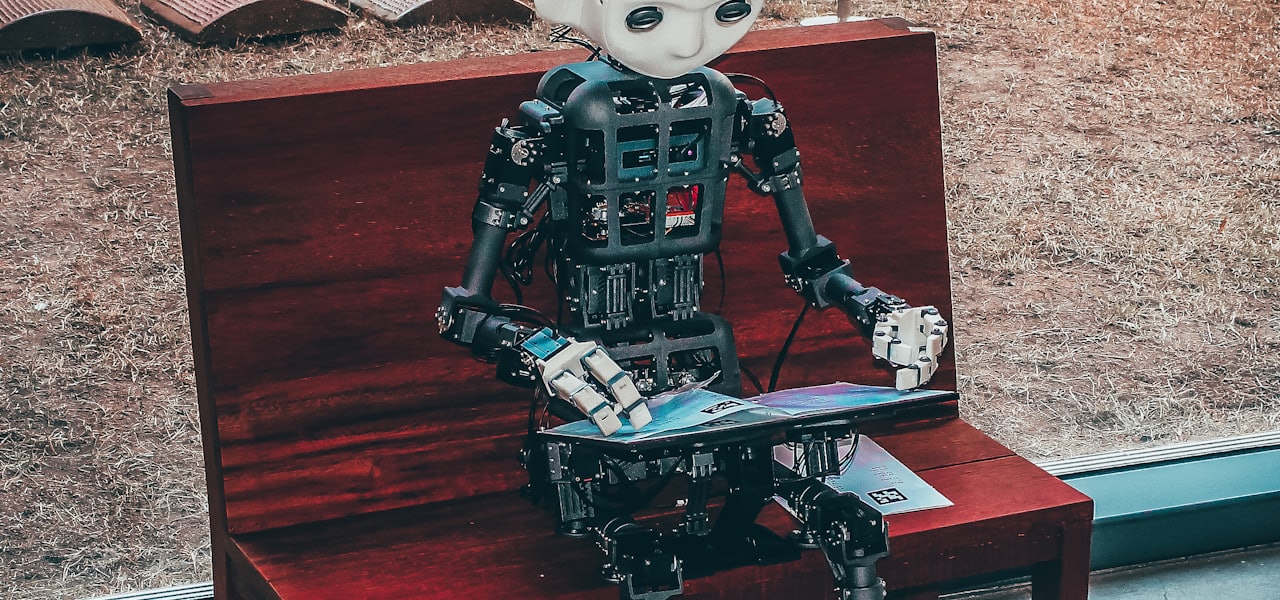
  • Automated Pain Recognition

    Automated Pain Recognition

    Automated Pain Recognition (APR) is a method for objectively measuring pain and at the same time represents an interdisciplinary research area that comprises elements of medicine, psychology, psychobiology, and computer science. The focus is on computer-aided objective recognition of pain, implemented on the basis of machine learning. Automated pain recognition allows for the valid, reliable detection and monitoring of pain in people who are unable to communicate verbally. The underlying machine learning processes are trained and validated in advance by means of unimodal or multimodal body signals. Signals used to detect pain may include facial expressions or gestures and may also be of a (psycho-)physiological or paralinguistic nature. To date, the focus has been on identifying pain intensity, but visionary efforts are also being made to recognize the quality, site, and temporal course of pain. However, the clinical implementation of this approach is a controversial topic in the field of pain research. Critics of automated pain recognition argue that pain diagnosis can only be performed subjectively by humans. == Background == Pain diagnosis under conditions where verbal reporting is restricted - such as in verbally and/or cognitively impaired people or in patients who are sedated or mechanically ventilated - is based on behavioral observations by trained professionals. However, all known observation procedures (e.g., Zurich Observation Pain Assessment (ZOPA)); Pain Assessment in Advanced Dementia Scale (PAINAD) require a great deal of specialist expertise. These procedures can be made more difficult by perception- and interpretation-related misjudgments on the part of the observer. With regard to the differences in design, methodology, evaluation sample, and conceptualization of the phenomenon of pain, it is difficult to compare the quality criteria of the various tools. Even if trained personnel could theoretically record pain intensity several times a day using observation instruments, it would not be possible to measure it every minute or second. In this respect, the goal of automated pain recognition is to use valid, robust pain response patterns that can be recorded multimodally for a temporally dynamic, high-resolution, automated pain intensity recognition system. == Procedure == For automated pain recognition, pain-relevant parameters are usually recorded using non-invasive sensor technology, which captures data on the (physical) responses of the person in pain. This can be achieved with camera technology that captures facial expressions, gestures, or posture, while audio sensors record paralinguistic features. (Psycho-)physiological information such as muscle tone and heart rate can be collected via biopotential sensors (electrodes). Pain recognition requires the extraction of meaningful characteristics or patterns from the data collected. This is achieved using machine learning techniques that are able to provide an assessment of the pain after training (learning), e.g., "no pain," "mild pain," or "severe pain." == Parameters == Although the phenomenon of pain comprises different components (sensory discriminative, affective (emotional), cognitive, vegetative, and (psycho-)motor), automated pain recognition currently relies on the measurable parameters of pain responses. These can be divided roughly into the two main categories of "physiological responses" and "behavioral responses". === Physiological responses === In humans, pain almost always initiates autonomic nervous processes that are reflected measurably in various physiological signals. ==== Physiological signals ==== Measurements can include electrodermal activity (EDA, also skin conductance), electromyography (EMG), electrocardiogram (ECG), blood volume pulse (BVP), electroencephalogram (EEG), respiration, and body temperature, which are regulatory mechanisms of the sympathetic and parasympathetic systems. Physiological signals are mainly recorded using special non-invasive surface electrodes (for EDA, EMG, ECG, and EEG), a blood volume pulse sensor (BVP), a respiratory belt (respiration), and a thermal sensor (body temperature). Endocrinological and immunological parameters can also be recorded, but this requires measures that are somewhat invasive (e.g., blood sampling). === Behavioral responses === Behavioral responses to pain fulfil two functions: protection of the body (e.g., through protective reflexes) and external communication of the pain (e.g., as a cry for help). The responses are particularly evident in facial expressions, gestures, and paralinguistic features. ==== Facial expressions ==== Behavioral signals captured comprise facial expression patterns (expressive behavior), which are measured with the aid of video signals. Facial expression recognition is based on the everyday clinical observation that pain often manifests itself in the patient's facial expressions but that this is not necessarily always the case, since facial expressions can be inhibited through self-control. Despite the possibility that facial expressions may be influenced consciously, facial expression behavior represents an essential source of information for pain diagnosis and is thus also a source of information for automatic pain recognition. One advantage of video-based facial expression recognition is the contact-free measurement of the face, provided that it can be captured on video, which is not possible in every position (e.g., lying face down) or may be limited by bandages covering the face. Facial expression analysis relies on rapid, spontaneous, and temporary changes in neuromuscular activity that lead to visually detectable changes in the face. ==== Gestures ==== Gestures are also captured predominantly using non-contact camera technology. Motor pain responses vary and are strongly dependent on the type and cause of the pain. They range from abrupt protective reflexes (e.g., spontaneous retraction of extremities or doubling up) to agitation (pathological restlessness) and avoidance behavior (hesitant, cautious movements). ==== Paralinguistic features of language ==== Among other things, pain leads to nonverbal linguistic behavior that manifests itself in sounds such as sighing, gasping, moaning, whining, etc. Paralinguistic features are usually recorded using highly sensitive microphones. == Algorithms == After the recording, pre-processing (e.g., filtering), and extraction of relevant features, an optional information fusion can be performed. During this process, modalities from different signal sources are merged to generate new or more precise knowledge. The pain is classified using machine learning processes. The method chosen has a significant influence on the recognition rate and depends greatly on the quality and granularity of the underlying data. Similar to the field of affective computing, the following classifiers are currently being used: Support Vector Machine (SVM): The goal of an SVM is to find a clearly defined optimal hyperplane with the greatest minimal distance to two (or more) classes to be separated. The hyperplane acts as a decision function for classifying an unknown pattern. Random Forest (RF): RF is based on the composition of random, uncorrelated decision trees. An unknown pattern is judged individually by each tree and assigned to a class. The final classification of the patterns by the RF is then based on a majority decision. k-Nearest Neighbors (k-NN): The k-NN algorithm classifies an unknown object using the class label that most commonly classifies the k neighbors closest to it. Its neighbors are determined using a selected similarity measure (e.g., Euclidean distance, Jaccard coefficient, etc.). Artificial neural networks (ANNs): ANNs are inspired by biological neural networks and model their organizational principles and processes in a very simplified manner. Class patterns are learned by adjusting the weights of the individual neuronal connections. == Databases == In order to classify pain in a valid manner, it is necessary to create representative, reliable, and valid pain databases that are available to the machine learner for training. An ideal database would be sufficiently large and would consist of natural (not experimental), high-quality pain responses. However, natural responses are difficult to record and can only be obtained to a limited extent; in most cases they are characterized by suboptimal quality. The databases currently available therefore contain experimental or quasi-experimental pain responses, and each database is based on a different pain model. The following list shows a selection of the most relevant pain databases (last updated: April 2020): UNBC-McMaster Shoulder Pain BioVid Heat Pain EmoPain SenseEmotion X-ITE Pain

    Read more →
  • International Conference on Computer Vision

    International Conference on Computer Vision

    The International Conference on Computer Vision (ICCV) is a research conference sponsored by the Institute of Electrical and Electronics Engineers (IEEE) held every other year. It is considered to be one of the top conferences in computer vision, alongside CVPR and ECCV, and it is held on years in which ECCV is not. The conference is usually spread over four to five days. Typically, experts in the focus areas give tutorial talks on the first day, then the technical sessions (and poster sessions in parallel) follow. Recent conferences have also had an increasing number of focused workshops and a commercial exhibition. == Awards == === Azriel Rosenfeld Lifetime Achievement Award === The Azriel Rosenfeld Award, or Azriel Rosenfeld Lifetime Achievement Award, recognizes researchers who have made significant contributions to the field of computer vision over their careers. It is named in memory of computer scientist and mathematician Azriel Rosenfeld. The following people have received this award: === Helmholtz Prize === The ICCV Helmholtz Prize, known as the Test of Time Award before 2013, is awarded every other year at the ICCV, recognizing ICCV papers from ten or more years earlier that had a significant impact on computer vision research. Winners are selected by the IEEE Computer Society's Technical Committee on Pattern Analysis and Machine Intelligence. The award is named after the 19th century physician and physicist Hermann von Helmholtz, and the ICCV's award is not related to the various Helmholtz Prizes in physics, or the Hermann von Helmholtz Prize in neuroscience. === Marr Prize === The ICCV best-paper award is the Marr Prize, named after British neuroscientist David Marr. === Mark Everingham Prize === The Mark Everingham Prize is an award given yearly by the Technical Committee on Pattern Analysis and Machine Intelligence of the IEEE Computer Society at the IEEE International Conference on Computer Vision or the European Conference on Computer Vision to commemorate the late Mark Everingham, "one of the rising stars of computer vision", and to encourage others to follow in his footsteps by acting to further progress in the computer vision community as a whole. The prize is given to a researcher, or a team of researchers, who have made a selfless contribution of significant benefit to other members of the computer vision community. The Mark Everingham Prize for Rigorous Evaluation was an award given in 2012 at the British Machine Vision Conference. === PAMI Distinguished Researcher Award === The PAMI Distinguished Researcher Award (until 2013 called Significant Researcher Award) is awarded to candidates whose research projects have significantly contributed to the progress of computer vision. Awards are made based on major research contributions, as well as the role of those contributions in influencing and inspiring other research. Candidates are nominated by the community. The following people have received this award: == Conference list == The conference is usually held in the Spring in various international locations.

    Read more →
  • BeyondCorp

    BeyondCorp

    BeyondCorp is an implementation of zero-trust computer security concepts creating a zero trust network. It is created by Google. == Background == It was created in response to the 2009 Operation Aurora. An open source implementation inspired by Google's research paper on an access proxy is known as "transcend". Google documented its Zero Trust journey from 2014 to 2018 through a series of articles in the journal ;login:. Google called their ZT network "BeyondCorp". Google implemented a Zero Trust architecture on a large scale, and relied on user and device credentials, regardless of location. Data was encrypted and protected from managed devices. Unmanaged devices, such as BYOD, were not given access to the BeyondCorp resources. == Design and technology == BeyondCorp utilized a zero trust security model, which is a relatively new security model that it assumes that all devices and users are potentially compromised. This is in contrast to traditional security models, which rely on firewalls and other perimeter defenses to protect sensitive data. === Trust === The corporate network grants no inherent trust, and all internal apps are accessed via the BeyondCorp system, regardless of whether the user is in a Google office or working remotely. BeyondCorp is related to Zero Trust architecture as it implements a true Zero Trust network, where all access is granted on identity, device, and authentication, based on robust underlying device and identity data sources. BeyondCorp works by using a number of security policies including authentication, authorization, and access control to ensure that only authorized users can access corporate resources. Authentication verifies the identity of the user, authorization determines whether the user has permission to access the requested resource, and access control policies restrict what the user can do with the resource. ==== Trust Inferrer ==== One of the main components in BeyondCorp's implementation is the Trust Inferrer. The Trust Inferrer is a security component (typically software) that looks at information about a user's device, like a computer or phone, to decide how much it can be trusted to access certain resources like important company documents. The Trust Inferrer checks things like the security of the device, whether it has the right software installed, and if it belongs to an authorized user. Based on all this information, the Trust Inferrer decides what the device can access and what it can't. === Security mechanisms === Unlike traditional VPNs, BeyondCorp's access policies are based on information about a device, its state, and its associated user. BeyondCorp considers both internal networks and external networks to be completely untrusted, and gates access to applications by dynamically asserting and enforcing levels, or “tiers,” of access. === Device Inventory Database === BeyondCorp utilized a Device Inventory Database and Device Identity that uniquely identifies a device through a digital certificate. Any changes to the device are recorded in the Device Inventory Database. The certificate is used to uniquely identify a device; however, additional information is required to grant access privileges to a resource. === Access Control Engine === Another important component of BeyondCorp's implementation is the Access Control Engine. Think of this as the brain of the Zero Trust architecture. The Access Control Engine is like a traffic cop standing at an intersection. Its job is to make sure that only authorized devices and users are allowed to access specific resources (like files or applications) on the network. It checks the access policy (the rules that say who can access what), the device's state (like whether it has the right software updates or security settings), and the resources being requested. Then it makes a decision on whether to grant or deny access based on all of this information. It helps ensure that only the right people and devices are allowed access to the network, which helps keep things secure. The Access Control Engine utilizes the output from the Trust Inferrer and other data that is fed into its system. == Usage == One of the first things Google did to implement a Zero Trust architecture was to capture and analyze network traffic. The purpose of analyzing the traffic was to build a baseline of what typical network traffic looked like. In doing so, BeyondCorp also discovered unusual, unexpected, and unauthorized traffic. This was very useful because it gave the BeyondCorp engineers critical information that assisted them in reengineering the system in a secure manner. Some of the benefits BeyondCorp realized by adopting a Zero Trust architecture include the ability to allow their employees to work securely from any location. It reduces the risk of data breaches since data and applications are protected and users and devices are constantly being verified. The Zero Trust architecture is scalable and can be adapted to the changing needs of the businesses and their users. Especially relevant in today's work-from-home era, BeyondCorp allows employees to access enterprise resources securely from any location, without the need for traditional VPNs.

    Read more →
  • Vowpal Wabbit

    Vowpal Wabbit

    Vowpal Wabbit (VW) is an open-source fast online interactive machine learning system library and program developed originally at Yahoo! Research, and currently at Microsoft Research. It was started and is led by John Langford. Vowpal Wabbit's interactive learning support is particularly notable including Contextual Bandits, Active Learning, and forms of guided Reinforcement Learning. Vowpal Wabbit provides an efficient scalable out-of-core implementation with support for a number of machine learning reductions, importance weighting, and a selection of different loss functions and optimization algorithms. == Notable features == The VW program supports: Multiple supervised (and semi-supervised) learning problems: Classification (both binary and multi-class) Regression Active learning (partially labeled data) for both regression and classification Multiple learning algorithms (model-types / representations) OLS regression Matrix factorization (sparse matrix SVD) Single layer neural net (with user specified hidden layer node count) Searn (Search and Learn) Latent Dirichlet Allocation (LDA) Stagewise polynomial approximation Recommend top-K out of N One-against-all (OAA) and cost-sensitive OAA reduction for multi-class Weighted all pairs Contextual-bandit (with multiple exploration/exploitation strategies) Multiple loss functions: squared error quantile hinge logistic poisson Multiple optimization algorithms Stochastic gradient descent (SGD) BFGS Conjugate gradient Regularization (L1 norm, L2 norm, & elastic net regularization) Flexible input - input features may be: Binary Numerical Categorical (via flexible feature-naming and the hash trick) Can deal with missing values/sparse-features Other features On the fly generation of feature interactions (quadratic and cubic) On the fly generation of N-grams with optional skips (useful for word/language data-sets) Automatic test-set holdout and early termination on multiple passes bootstrapping User settable online learning progress report + auditing of the model Hyperparameter optimization == Scalability == Vowpal wabbit has been used to learn a tera-feature (1012) data-set on 1000 nodes in one hour. Its scalability is aided by several factors: Out-of-core online learning: no need to load all data into memory The hashing trick: feature identities are converted to a weight index via a hash (uses 32-bit MurmurHash3) Exploiting multi-core CPUs: parsing of input and learning are done in separate threads. Compiled C++ code

    Read more →
  • Teacher forcing

    Teacher forcing

    Teacher forcing is an algorithm for training the weights of recurrent neural networks (RNNs). It involves feeding observed sequence values (i.e. ground-truth samples) back into the RNN after each step, thus forcing the RNN to stay close to the ground-truth sequence. The term "teacher forcing" can be motivated by comparing the RNN to a human student taking a multi-part exam where the answer to each part (for example a mathematical calculation) depends on the answer to the preceding part. In this analogy, rather than grading every answer in the end, with the risk that the student fails every single part even though they only made a mistake in the first one, a teacher records the score for each individual part and then tells the student the correct answer, to be used in the next part. The use of an external teacher signal is in contrast to real-time recurrent learning (RTRL). Teacher signals are known from oscillator networks. The promise is, that teacher forcing helps to reduce the training time. The term "teacher forcing" was introduced in 1989 by Ronald J. Williams and David Zipser, who reported that the technique was already being "frequently used in dynamical supervised learning tasks" around that time. A NeurIPS 2016 paper introduced the related method of "professor forcing".

    Read more →
  • Fitness approximation

    Fitness approximation

    Fitness approximation aims to approximate the objective or fitness functions in evolutionary optimization by building up machine learning models based on data collected from numerical simulations or physical experiments. The machine learning models for fitness approximation are also known as meta-models or surrogates, and evolutionary optimization based on approximated fitness evaluations are also known as surrogate-assisted evolutionary approximation. Fitness approximation in evolutionary optimization can be seen as a sub-area of data-driven evolutionary optimization. == Approximate models in function optimization == === Motivation === In many real-world optimization problems including engineering problems, the number of fitness function evaluations needed to obtain a good solution dominates the optimization cost. In order to obtain efficient optimization algorithms, it is crucial to use prior information gained during the optimization process. Conceptually, a natural approach to utilizing the known prior information is building a model of the fitness function to assist in the selection of candidate solutions for evaluation. A variety of techniques for constructing such a model, often also referred to as surrogates, metamodels or approximation models – for computationally expensive optimization problems have been considered. === Approaches === Common approaches to constructing approximate models based on learning and interpolation from known fitness values of a small population include: Low-degree polynomials and regression models Fourier surrogate modeling Artificial neural networks including Multilayer perceptrons Radial basis function network Support vector machines Due to the limited number of training samples and high dimensionality encountered in engineering design optimization, constructing a globally valid approximate model remains difficult. As a result, evolutionary algorithms using such approximate fitness functions may converge to local optima. Therefore, it can be beneficial to selectively use the original fitness function together with the approximate model.

    Read more →
  • ChromaDB

    ChromaDB

    Chroma or ChromaDB is open-source data infrastructure tailored to applications with large language models. Its headquarters are in San Francisco. In April 2023, it raised 18 million US dollars as seed funding. ChromaDB has been used in academic studies on artificial intelligence, particularly as part of the tech stack for retrieval-augmented generation.

    Read more →
  • Targeted maximum likelihood estimation

    Targeted maximum likelihood estimation

    Targeted Maximum Likelihood Estimation (TMLE) (also more accurately referred to as Targeted Minimum Loss-Based Estimation) is a general statistical estimation framework for causal inference and semiparametric models. TMLE combines ideas from maximum likelihood estimation, semiparametric efficiency theory, and machine learning. It was introduced by Mark J. van der Laan and colleagues in the mid-2000s as a method that yields asymptotically efficient plug-in estimators while allowing the use of flexible, data-adaptive algorithms such as ensemble machine learning for nuisance parameter estimation. TMLE is used in epidemiology, biostatistics, and the social sciences to estimate causal effects in observational and experimental studies. Applications of TMLE include Longitudinal TMLE (LTMLE) for time-varying treatments and confounders. Variations in how the targeting step in TMLE is carried out have resulted in various versions of TMLE such as Collaborative TMLE (CTMLE) and Adaptive TMLE for improved finite-sample performance and automated variable selection. == History == The TMLE framework was first described by van der Laan and Rubin (2006) as a general approach for the construction of efficient plug-in estimators of smooth features of the data density. It was demonstrated in the context of causal inference and missing data problems. It was developed to address limitations of traditional doubly robust methods, such as Augmented Inverse Probability Weighting (AIPW), by respecting the plug-in principle in the sense that it respects that the target parameter is a function of the data density that is an element of the statistical model. TMLE estimates the data density or relevant parts of it with machine learning and targets these machine learning fits before it is plugged in the target parameter mapping. In this manner, a TMLE always respects global knowledge and satisfies known bounds such as that the target parameter is a probability . Since its introduction, TMLE has been developed in a series of theoretical and applied papers, culminating in book-length treatments of the method and its applications to survival analysis, adaptive designs, and longitudinal data. == Methodology == At its core, TMLE is a two-step estimation procedure: Initial estimation: Machine learning methods (such as the Super Learner ensemble) are used to obtain flexible estimates of nuisance parameters, such as outcome regressions and propensity scores. Targeting step: The initial estimate is updated by solving a score equation (the efficient influence function) so that the final estimator is consistent, asymptotically normal, and efficient under mild regularity conditions. The targeted machine learning fit is then mapped into the corresponding estimator of the target parameter by simply plugging it in the target parameter mapping. This approach balances the bias–variance trade-off by combining data-adaptive estimation with semiparametric efficiency theory. TMLE is doubly robust, meaning it remains consistent if either the outcome model or the treatment model is consistently estimated. === Formula === Here we explain the TMLE of the average treatment effect of a binary treatment on an outcome adjusting for baseline covariates. Consider i.i.d. observations O i = ( W i , A i , Y i ) {\displaystyle O_{i}=(W_{i},A_{i},Y_{i})} from a distribution P 0 {\displaystyle P_{0}} , where W {\displaystyle W} are baseline covariates, A {\displaystyle A} is a binary treatment, and Y {\displaystyle Y} is an outcome. Let Q ¯ ( a , w ) = E [ Y ∣ A = a , W = w ] {\displaystyle {\bar {Q}}(a,w)=\mathbb {E} [Y\mid A=a,W=w]} represent the outcome model and g ( a ∣ w ) = P ( A = a ∣ W = w ) {\displaystyle g(a\mid w)=P(A=a\mid W=w)} represent the propensity score. The average treatment effect (ATE) is given by ψ 0 = E { Q ¯ ( 1 , W ) − Q ¯ ( 0 , W ) } . {\displaystyle \psi _{0}=\mathbb {E} \{{\bar {Q}}(1,W)-{\bar {Q}}(0,W)\}.} A basic TMLE for the ATE proceeds as follows: Step 1: Estimate initial models. Obtain estimates Q ¯ ^ ( a , w ) {\displaystyle {\hat {\bar {Q}}}(a,w)} and g ^ ( a ∣ w ) {\displaystyle {\hat {g}}(a\mid w)} , often using flexible methods such as Super Learner. Step 2: Compute the clever covariate. Define: H ( A , W ) = A g ^ ( 1 ∣ W ) − 1 − A g ^ ( 0 ∣ W ) . {\displaystyle H(A,W)={\frac {A}{{\hat {g}}(1\mid W)}}-{\frac {1-A}{{\hat {g}}(0\mid W)}}.} Step 3: Estimate the fluctuation parameter. Fit a logistic regression of Y {\displaystyle Y} on H ( A , W ) {\displaystyle H(A,W)} with logit ⁡ ( Q ¯ ^ ( A , W ) ) {\displaystyle \operatorname {logit} ({\hat {\bar {Q}}}(A,W))} as offset. This yields ε ^ {\displaystyle {\hat {\varepsilon }}} , the MLE that solves the score equation: 1 n ∑ i = 1 n H ( A i , W i ) { Y i − Q ¯ ^ ε ( A i , W i ) } = 0. {\displaystyle {\frac {1}{n}}\sum _{i=1}^{n}H(A_{i},W_{i}){\big \{}Y_{i}-{\hat {\bar {Q}}}^{\varepsilon }(A_{i},W_{i}){\big \}}=0.} Step 4: Update the initial estimate. Apply the "blip" to obtain the targeted estimate: Q ¯ ^ ∗ ( A , W ) = expit ⁡ ( logit ⁡ ( Q ¯ ^ ( A , W ) ) + ε ^ H ( A , W ) ) . {\displaystyle {\hat {\bar {Q}}}^{}(A,W)=\operatorname {expit} {\Big (}\operatorname {logit} {\big (}{\hat {\bar {Q}}}(A,W){\big )}+{\hat {\varepsilon }}\,H(A,W){\Big )}.} Step 5: Compute the TMLE. The ATE estimate is: ψ ^ TMLE = 1 n ∑ i = 1 n [ Q ¯ ^ ∗ ( 1 , W i ) − Q ¯ ^ ∗ ( 0 , W i ) ] . {\displaystyle {\hat {\psi }}_{\text{TMLE}}={\frac {1}{n}}\sum _{i=1}^{n}{\big [}{\hat {\bar {Q}}}^{}(1,W_{i})-{\hat {\bar {Q}}}^{}(0,W_{i}){\big ]}.} Inference. The efficient influence function (EIF) for the ATE is: D ∗ ( O ) = H ( A , W ) { Y − Q ¯ ∗ ( A , W ) } + Q ¯ ∗ ( 1 , W ) − Q ¯ ∗ ( 0 , W ) − ψ . {\displaystyle D^{}(O)=H(A,W)\{Y-{\bar {Q}}^{}(A,W)\}+{\bar {Q}}^{}(1,W)-{\bar {Q}}^{}(0,W)-\psi .} The variance is estimated by σ ^ 2 = n − 1 ∑ i = 1 n ( D ∗ ( O i ) ) 2 {\displaystyle {\hat {\sigma }}^{2}=n^{-1}\sum _{i=1}^{n}{\big (}D^{}(O_{i}){\big )}^{2}} , yielding Wald-type confidence intervals ψ ^ TMLE ± z 1 − α / 2 σ ^ / n {\displaystyle {\hat {\psi }}_{\text{TMLE}}\pm z_{1-\alpha /2}\,{\hat {\sigma }}/{\sqrt {n}}} . Remark. For continuous outcomes, a linear fluctuation Q ¯ ^ ∗ = Q ¯ ^ + ε ^ H {\displaystyle {\hat {\bar {Q}}}^{}={\hat {\bar {Q}}}+{\hat {\varepsilon }}\,H} may be used instead. For bounded continuous outcomes, the logistic fluctuation (after rescaling Y {\displaystyle Y} to [ 0 , 1 ] {\displaystyle [0,1]} ) is often preferred for improved finite-sample performance. == Applications == TMLE has been applied in: Epidemiology: Estimating causal effects of exposures and interventions in observational cohort studies. Clinical trials and real-world evidence: The Targeted Learning roadmap provides a structured framework for generating and validating real-world evidence (RWE), bridging randomized trials and observational data using TMLE and related estimation techniques. This approach enables transparency, sensitivity analysis, and stronger causal inference for regulatory and clinical trial contexts. High-dimensional settings: Integration with ensemble methods for causal effect estimation. TMLE has been successfully applied in pharmacoepidemiology where a large number of covariates are automatically selected to adjust for confounding. In a study of post–myocardial infarction statin use and 1-year mortality, TMLE demonstrated robust performance relative to inverse probability weighting in scenarios with hundreds of potential confounders. == Derivatives and extensions == Longitudinal TMLE (LTMLE): A methodological extension of TMLE for longitudinal data with time-varying treatments, confounders, and censoring. It allows the estimation of dynamic treatment regimes and intervention-specific causal effects over time. This framework was originally introduced by van der Laan & Gruber (2012). Collaborative TMLE (CTMLE): Enhances finite-sample performance and variable selection by collaboratively fitting the treatment mechanism in conjunction with the target parameter. == Software == Several R packages implement TMLE and related methods: tmle: Functions for binary, categorical, and continuous outcomes. ltmle: Implementation for longitudinal data with time-varying treatments and outcomes. ctmle: Algorithms for collaborative TMLE and adaptive variable selection. SuperLearner: A theoretically grounded, cross-validated ensemble learning method that combines predictions from multiple algorithms to minimize predictive risk. Widely used in TMLE for estimating nuisance parameters. The original implementation is available as the R package SuperLearner. Recent machine learning platforms like H2O AutoML implement similar ensemble strategies, combining diverse learners in parallel and leveraging stacking and blending techniques, effectively functioning as a large-scale Super Learner.

    Read more →
  • Farthest-first traversal

    Farthest-first traversal

    In computational geometry, the farthest-first traversal of a compact metric space is a sequence of points in the space, where the first point is selected arbitrarily and each successive point is as far as possible from the set of previously-selected points. The same concept can also be applied to a finite set of geometric points, by restricting the selected points to belong to the set or equivalently by considering the finite metric space generated by these points. For a finite metric space or finite set of geometric points, the resulting sequence forms a permutation of the points, also known as the greedy permutation. Every prefix of a farthest-first traversal provides a set of points that is widely spaced and close to all remaining points. More precisely, no other set of equally many points can be spaced more than twice as widely, and no other set of equally many points can be less than half as far to its farthest remaining point. In part because of these properties, farthest-point traversals have many applications, including the approximation of the traveling salesman problem and the metric k-center problem. They may be constructed in polynomial time, or (for low-dimensional Euclidean spaces) approximated in near-linear time. == Definition and properties == A farthest-first traversal is a sequence of points in a compact metric space, with each point appearing at most once. If the space is finite, each point appears exactly once, and the traversal is a permutation of all of the points in the space. The first point of the sequence may be any point in the space. Each point p after the first must have the maximum possible distance to the set of points earlier than p in the sequence, where the distance from a point to a set is defined as the minimum of the pairwise distances to points in the set. A given space may have many different farthest-first traversals, depending both on the choice of the first point in the sequence (which may be any point in the space) and on ties for the maximum distance among later choices. Farthest-point traversals may be characterized by the following properties. Fix a number k, and consider the prefix formed by the first k points of the farthest-first traversal of any metric space. Let r be the distance between the final point of the prefix and the other points in the prefix. Then this subset has the following two properties: All pairs of the selected points are at distance at least r from each other, and All points of the metric space are at distance at most r from the subset. Conversely any sequence having these properties, for all choices of k, must be a farthest-first traversal. These are the two defining properties of a Delone set, so each prefix of the farthest-first traversal forms a Delone set. == Applications == Rosenkrantz, Stearns & Lewis (1977) used the farthest-first traversal to define the farthest-insertion heuristic for the travelling salesman problem. This heuristic finds approximate solutions to the travelling salesman problem by building up a tour on a subset of points, adding one point at a time to the tour in the ordering given by a farthest-first traversal. To add each point to the tour, one edge of the previous tour is broken and replaced by a pair of edges through the added point, in the cheapest possible way. Although Rosenkrantz et al. prove only a logarithmic approximation ratio for this method, they show that in practice it often works better than other insertion methods with better provable approximation ratios. Later, the same sequence of points was popularized by Gonzalez (1985), who used it as part of greedy approximation algorithms for two problems in clustering, in which the goal is to partition a set of points into k clusters. One of the two problems that Gonzalez solve in this way seeks to minimize the maximum diameter of a cluster, while the other, known as the metric k-center problem, seeks to minimize the maximum radius, the distance from a chosen central point of a cluster to the farthest point from it in the same cluster. For instance, the k-center problem can be used to model the placement of fire stations within a city, in order to ensure that every address within the city can be reached quickly by a fire truck. For both clustering problems, Gonzalez chooses a set of k cluster centers by selecting the first k points of a farthest-first traversal, and then creates clusters by assigning each input point to the nearest cluster center. If r is the distance from the set of k selected centers to the next point at position k + 1 in the traversal, then with this clustering every point is within distance r of its center and every cluster has diameter at most 2r. However, the subset of k centers together with the next point are all at distance at least r from each other, and any k-clustering would put some two of these points into a single cluster, with one of them at distance at least r/2 from its center and with diameter at least r. Thus, Gonzalez's heuristic gives an approximation ratio of 2 for both clustering problems. Gonzalez's heuristic was independently rediscovered for the metric k-center problem by Dyer & Frieze (1985), who applied it more generally to weighted k-center problems. Another paper on the k-center problem from the same time, Hochbaum & Shmoys (1985), achieves the same approximation ratio of 2, but its techniques are different. Nevertheless, Gonzalez's heuristic, and the name "farthest-first traversal", are often incorrectly attributed to Hochbaum and Shmoys. For both the min-max diameter clustering problem and the metric k-center problem, these approximations are optimal: the existence of a polynomial-time heuristic with any constant approximation ratio less than 2 would imply that P = NP. As well as for clustering, the farthest-first traversal can also be used in another type of facility location problem, the max-min facility dispersion problem, in which the goal is to choose the locations of k different facilities so that they are as far apart from each other as possible. More precisely, the goal in this problem is to choose k points from a given metric space or a given set of candidate points, in such a way as to maximize the minimum pairwise distance between the selected points. Again, this can be approximated by choosing the first k points of a farthest-first traversal. If r denotes the distance of the kth point from all previous points, then every point of the metric space or the candidate set is within distance r of the first k − 1 points. By the pigeonhole principle, some two points of the optimal solution (whatever it is) must both be within distance r of the same point among these first k − 1 chosen points, and (by the triangle inequality) within distance 2r of each other. Therefore, the heuristic solution given by the farthest-first traversal is within a factor of two of optimal. Other applications of the farthest-first traversal include color quantization (clustering the colors in an image to a smaller set of representative colors), progressive scanning of images (choosing an order to display the pixels of an image so that prefixes of the ordering produce good lower-resolution versions of the whole image rather than filling in the image from top to bottom), point selection in the probabilistic roadmap method for motion planning, simplification of point clouds, generating masks for halftone images, hierarchical clustering, finding the similarities between polygon meshes of similar surfaces, choosing diverse and high-value observation targets for underwater robot exploration, fault detection in sensor networks, modeling phylogenetic diversity, matching vehicles in a heterogenous fleet to customer delivery requests, uniform distribution of geodetic observatories on the Earth's surface or of other types of sensor network, generation of virtual point lights in the instant radiosity computer graphics rendering method, and geometric range searching data structures. == Algorithms == === Greedy exact algorithm === The farthest-first traversal of a finite point set may be computed by a greedy algorithm that maintains the distance of each point from the previously selected points, performing the following steps: Initialize the sequence of selected points to the empty sequence, and the distances of each point to the selected points to infinity. While not all points have been selected, repeat the following steps: Scan the list of not-yet-selected points to find a point p that has the maximum distance from the selected points. Remove p from the not-yet-selected points and add it to the end of the sequence of selected points. For each remaining not-yet-selected point q, replace the distance stored for q by the minimum of its old value and the distance from p to q. For a set of n points, this algorithm takes O(n2) steps and O(n2) distance computations. === Approximations === A faster approximation algorithm, given by Har-Peled & Mendel (2006), applie

    Read more →